Prismi srl Logo organization
  • HOME
  • SERVICE
  • RUBBER ROLLS PRODUCTIONS
    • ACOUSTIC RUBBER ROLLS
    • ACOUSTIC RUBBER CORK ROLLS
    • RUBBER WALL BREAK STRIP
    • Rubber Panel Partition Walls
  • NEWS
    • VIDEO
  • CONTACT
    • Cookie Policy (EU)
    • Privacy Policy
  • English
    • Italian
    • French
    • Spanish
    • German

Type To Search

Prismi srl Logo organization
  • HOME
  • SERVICE
  • RUBBER ROLLS PRODUCTIONS
    • ACOUSTIC RUBBER ROLLS
    • ACOUSTIC RUBBER CORK ROLLS
    • RUBBER WALL BREAK STRIP
    • Rubber Panel Partition Walls
  • NEWS
    • VIDEO
  • CONTACT
    • Cookie Policy (EU)
    • Privacy Policy
  • English
    • Italian
    • French
    • Spanish
    • German
  • HOME
  • SERVICE
  • RUBBER ROLLS PRODUCTIONS
    • ACOUSTIC RUBBER ROLLS
    • ACOUSTIC RUBBER CORK ROLLS
    • RUBBER WALL BREAK STRIP
    • Rubber Panel Partition Walls
  • NEWS
    • VIDEO
  • CONTACT
    • Cookie Policy (EU)
    • Privacy Policy
  • English
    • Italian
    • French
    • Spanish
    • German
Prismi srl Logo organization

Type To Search

  • English
    • Italiano
    • Français
    • Español
    • Deutsch
Prismi srl Logo organization
  • HOME
  • SERVICE
  • RUBBER ROLLS PRODUCTIONS
    • ACOUSTIC RUBBER ROLLS
    • ACOUSTIC RUBBER CORK ROLLS
    • RUBBER WALL BREAK STRIP
    • Rubber Panel Partition Walls
  • NEWS
    • VIDEO
  • CONTACT
    • Cookie Policy (EU)
    • Privacy Policy
  • English
    • Italian
    • French
    • Spanish
    • German
acoustic rubber rolls

Subfloor Noise Reduction: Rubber Underlayment Explained
Subfloor Noise Reduction: Rubber Underlayment Explained

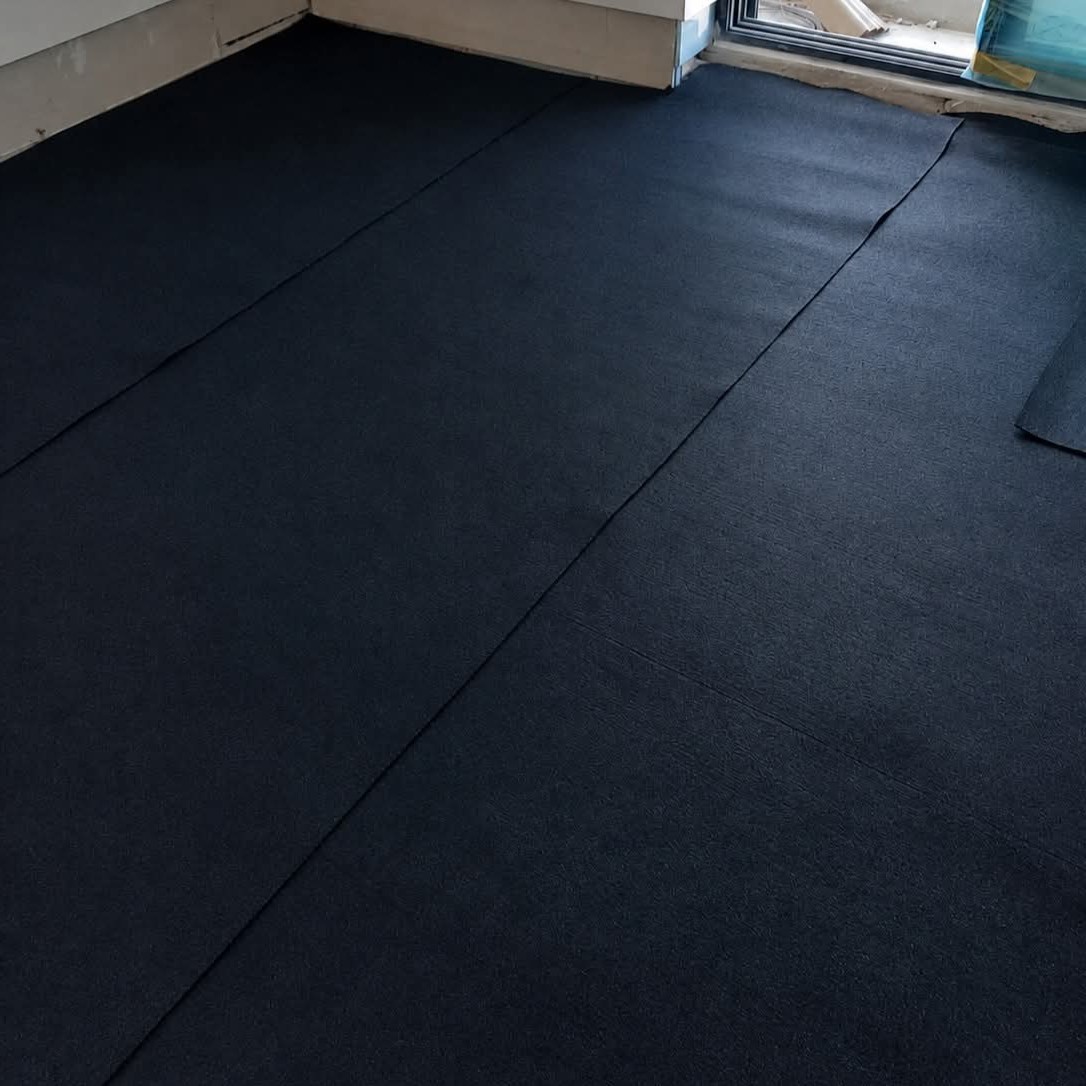
The subfloor is where most impact noise problems are won or lost. Here’s what determines whether a rubber underlayment actually performs.

The Role of the Subfloor in Noise Transmission

Subfloor noise reduction depends on what sits directly beneath the finished flooring, not on the finished surface itself. A resilient rubber layer placed at subfloor level intercepts impact energy at its source, the point of contact, which is far more effective than trying to manage noise after it has already entered the structure.

Full-Contact Installation Is Non-Negotiable

Soundproofing subfloor projects fail most often due to incomplete contact between the underlayment and the substrate: voids, uneven surfaces or poor adhesion create acoustic bridges that undermine the material’s rated performance. Substrate preparation, leveling, cleaning, moisture checking, matters as much as the underlayment product itself.

Matching Thickness to Load and Finished Flooring Type

Thinner rubber underlayment (2–4 mm) is generally sufficient beneath resilient or laminate flooring in residential settings. Heavier commercial and industrial applications, where subfloor noise reduction must also handle mechanical load and vibration, typically call for 6–12 mm rubber layers, sometimes combined with a rubber-cork composite for added comfort.

Rubber-Cork as an Alternative Subfloor Solution

For projects where thermal insulation and underfoot comfort matter alongside acoustic performance, a rubber-cork underlayment roll offers a practical middle ground, retaining much of rubber’s mass-driven damping while adding cork’s natural resilience and lower thermal conductivity, a combination increasingly requested in renovation projects.

Testing and Verifying Performance After Installation

Once a subfloor noise reduction layer is installed, performance can be verified informally through a simple tapping or foot-traffic test comparing before-and-after perceived noise, though this is subjective and not a substitute for proper acoustic measurement. For projects where documented compliance is required, multi-family housing, commercial leases with noise clauses, an on-site impact sound test conducted by an acoustic consultant provides an objective Ln,w or IIC figure for the finished assembly, which is the only reliable way to confirm the soundproofing subfloor meets its intended target rather than relying on the underlayment’s laboratory rating alone.

Documenting the Installation for Future Reference

For contractors and property managers, keeping a simple record of which rubber underlayment product, thickness and density was installed in each unit or area is worth the small extra effort. When noise complaints arise later, this documentation makes it far faster to diagnose whether the issue lies with the subfloor noise reduction layer itself, a gap in installation, or a source unrelated to the flooring system, rather than starting the investigation from scratch months or years after the original work was completed. Worth a look too: Soundproof Flooring Guide hub, MGE sub-screed underlay — new construction, MGC direct floating-floor underlay — renovation and How Thick Should a Rubber Sound Deadening Sheet Be?.
PrevHow to Soundproof a Wooden Floor (Without Removing It)

How to Soundproof a Wooden Floor (Without Removing It)

18 August 2026

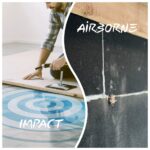
Impact Noise vs Airborne Noise: Which Flooring Solution You Need

19 August 2026
NextImpact Noise vs Airborne Noise: Which Flooring Solution You Need

Related Posts

Read More
acoustic rubber rolls
7 February 2026by think green

Safety and Quality: A+ VOC Certified Rubber-Cork Acoustic Underlay PRISMI MGC

Safety and Quality: A+ VOC Certified Rubber-Cork Acoustic Underlay PRISMI...
Read More
acoustic rubber rolls
22 December 2025by think green

Certified Impact Sound Insulation for Screed and Underfloor

Certified Impact Sound Insulation for Screed and...
Recent Posts
  • Impact Noise vs Airborne Noise: Which Flooring Solution You Need
  • Subfloor Noise Reduction: Rubber Underlayment Explained
  • How to Soundproof a Wooden Floor (Without Removing It)
  • Soundproof Flooring: The Complete Guide to Floor and Subfloor Noise Reduction
  • Rubber Roll Flooring: Buying in Bulk for Industrial and Commercial Projects
Archives
  • August 2026
  • June 2026
  • March 2026
  • February 2026
  • January 2026
  • December 2025
  • September 2025
  • August 2025
  • July 2025
  • June 2025
Categories
  • acoustic rubber rolls

Copyright © 1990-2026 Prismi - All Rights Reserved Prismi srl - via dell'industria 44 63076 Monteprandone (AP) Italy - P.IVA 01396170449

Top
Soundproof rubber rolls
Manage Consent
To provide the best experiences, we use technologies like cookies to store and/or access device information. Consenting to these technologies will allow us to process data such as browsing behavior or unique IDs on this site. Not consenting or withdrawing consent, may adversely affect certain features and functions.
Functional Always active
The technical storage or access is strictly necessary for the legitimate purpose of enabling the use of a specific service explicitly requested by the subscriber or user, or for the sole purpose of carrying out the transmission of a communication over an electronic communications network.
Preferences
The technical storage or access is necessary for the legitimate purpose of storing preferences that are not requested by the subscriber or user.
Statistics
The technical storage or access that is used exclusively for statistical purposes. The technical storage or access that is used exclusively for anonymous statistical purposes. Without a subpoena, voluntary compliance on the part of your Internet Service Provider, or additional records from a third party, information stored or retrieved for this purpose alone cannot usually be used to identify you.
Marketing
The technical storage or access is required to create user profiles to send advertising, or to track the user on a website or across several websites for similar marketing purposes.
  • Manage options
  • Manage services
  • Manage {vendor_count} vendors
  • Read more about these purposes
View preferences
  • {title}
  • {title}
  • {title}