

PRISMI MGE Recycled Rubber Acoustic Roll underlay for Sub-Screed
PRISMI MGE is a recycled rubber roll designed as an acoustic underlay sub-screed for sound insulation in construction. Made with 92% recycled SBR rubber granules, it offers impact noise reduction (ΔLw from 18 dB upwards), compression resistance, and environmental sustainability, compliant with UNI EN ISO 10140-3 and green building criteria like CAM.
Made by Prismi Srl — Monteprandone (Ascoli Piceno, Italy), specialist in recycled rubber manufacturing since 1990. Acoustic performance independently tested by an ACCREDIA accredited laboratory in compliance with UNI EN ISO 10140-3:2021.
MGE rubber acoustic underlay is engineered for sub-screed installation in residential, commercial and educational buildings — the professional-grade solution for impact sound insulation under floating and bonded floor systems.
Ideal for floating screeds, CLS or precast slabs, with thickness from 3 to 10 mm, density 700-980 kg/m³, for residential, commercial, and industrial applications.
Product Description PRISMI MGE
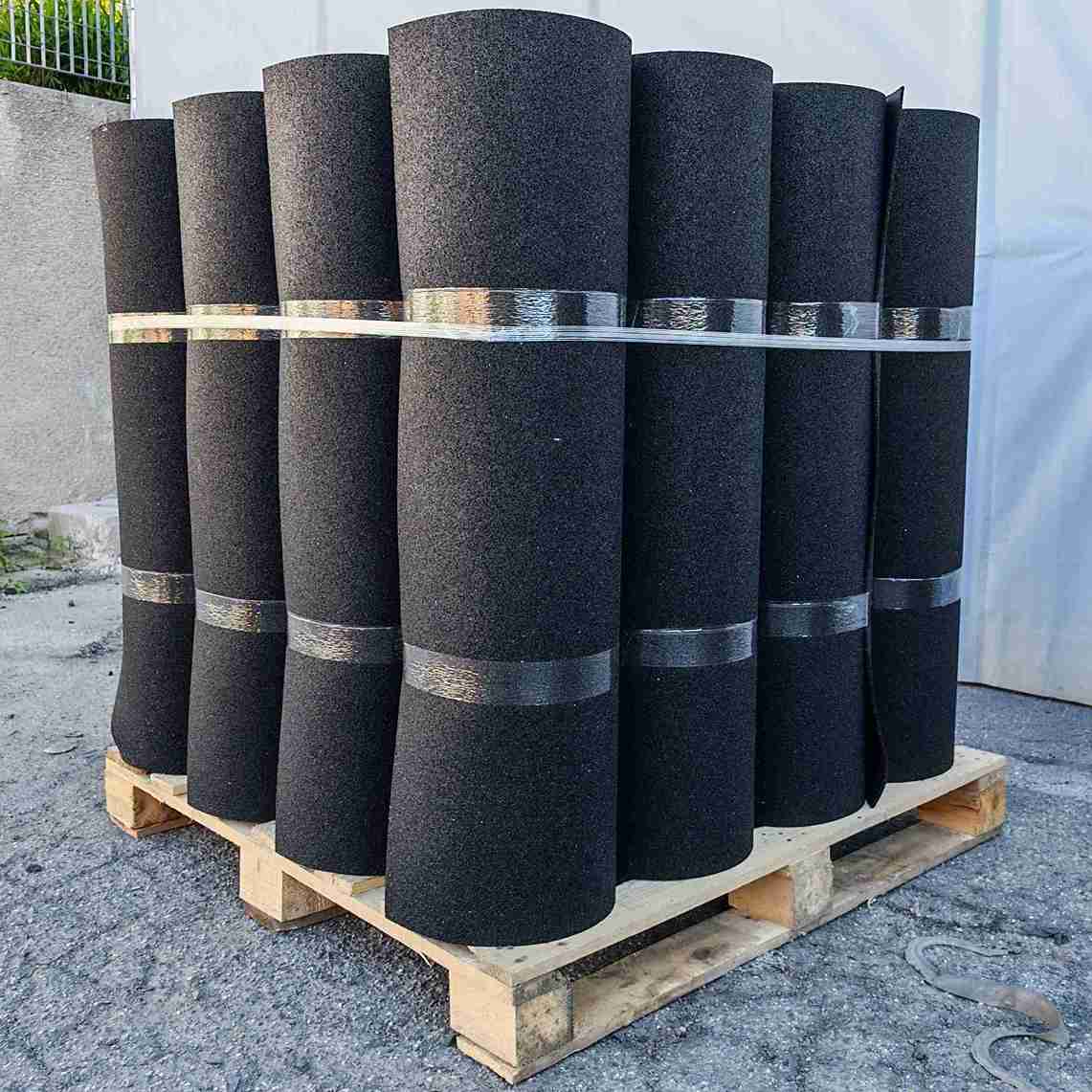
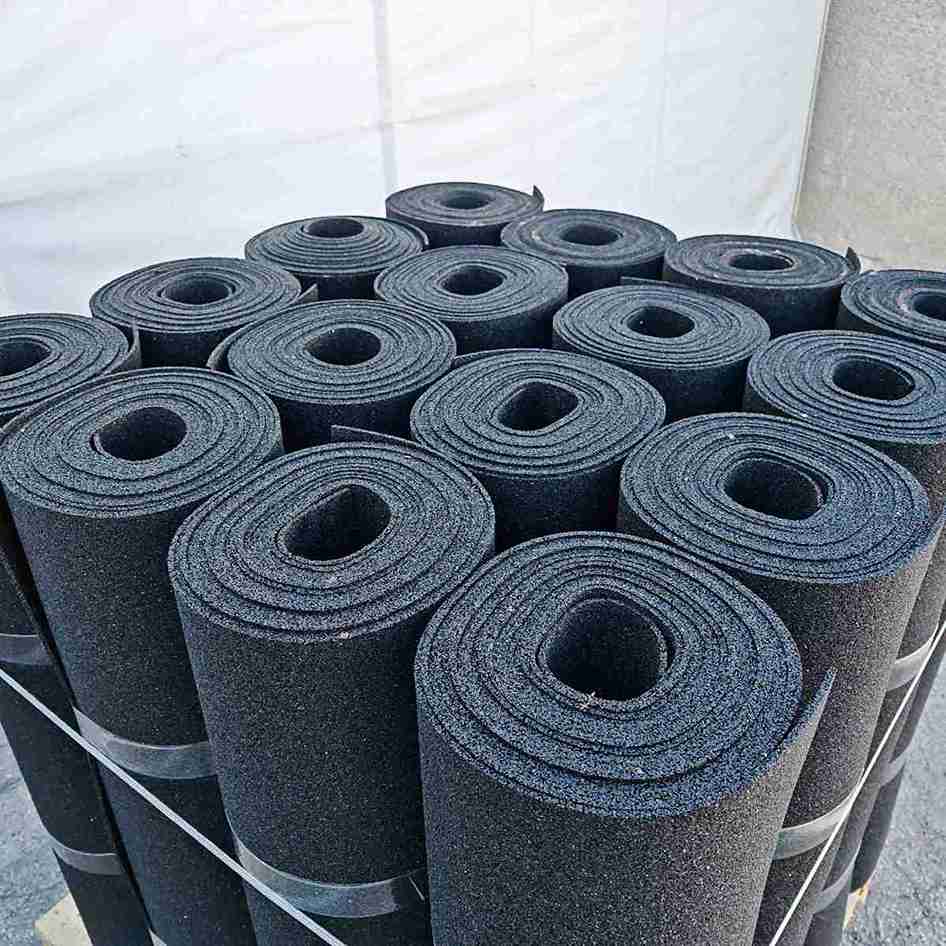
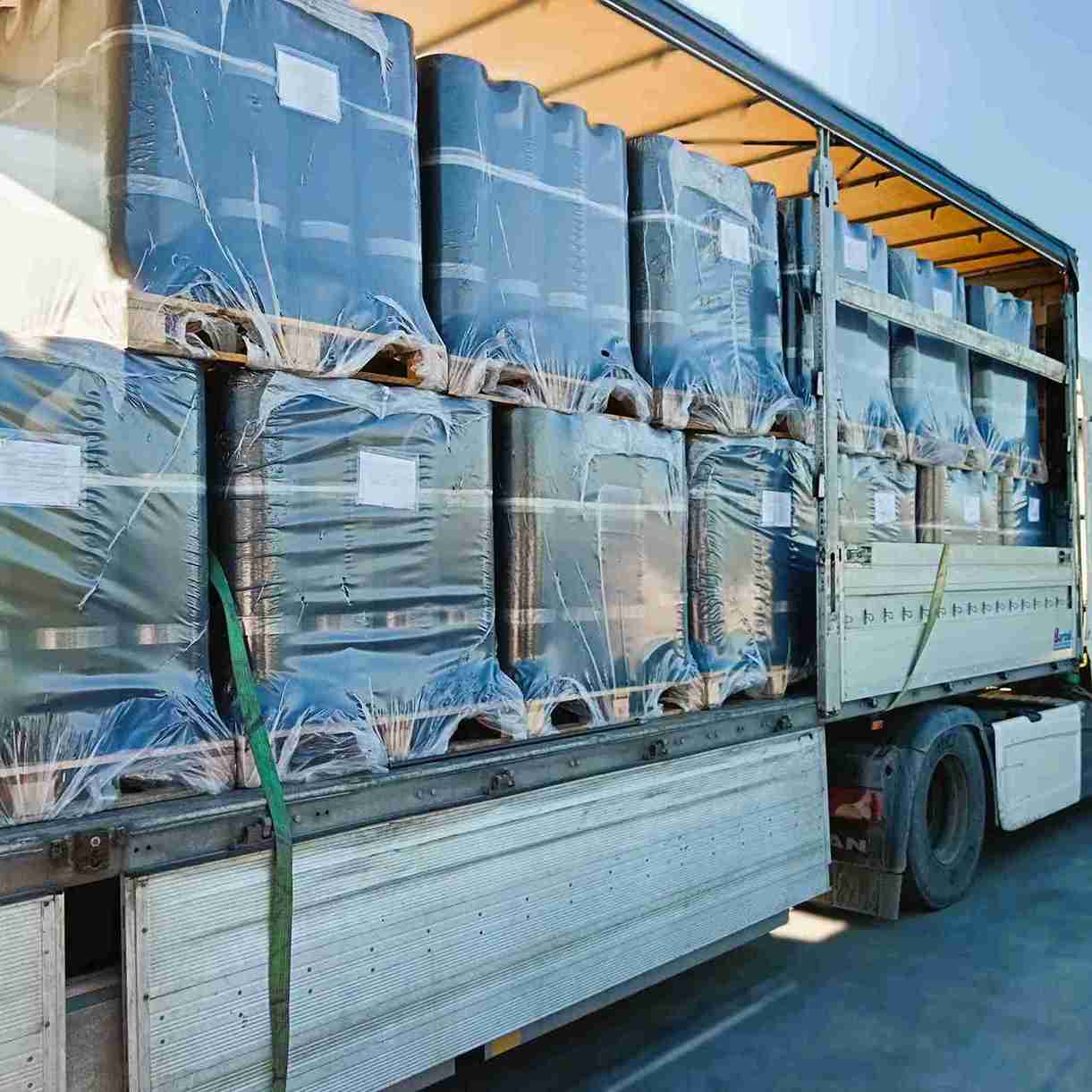
PRISMI MGE represents innovation in building sound insulation, a recycled rubber roll specifically formulated as an acoustic underlay sub-screed.
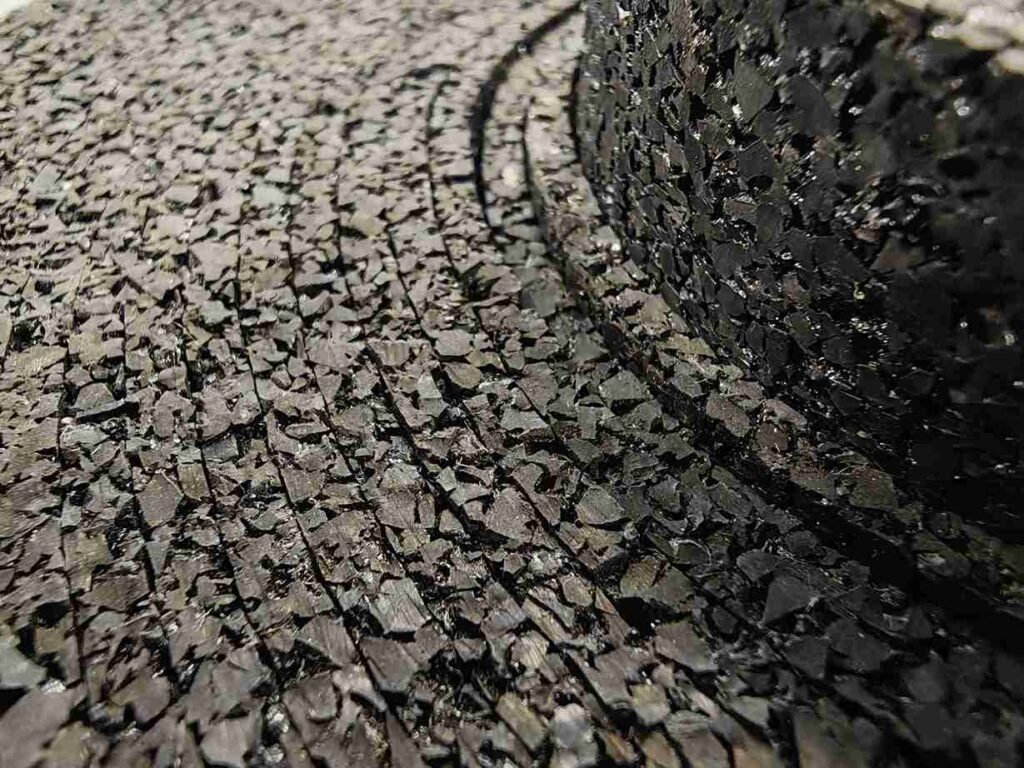
Produced by Prismi Srl, a leader in rubber recycling, this anti-impact insulator is composed of SBR (styrene-butadiene rubber) granules bonded with non-toxic binders, ensuring 92% recycled content from end-of-life tires (ELTs).
Its resilient structure creates an elastic barrier that absorbs and dissipates vibrations, effectively reducing footfall and airborne noise in residential buildings, offices, and industrial environments.
Unlike traditional materials like felts or polyethylene, PRISMI MGE delivers superior performance in dynamic stiffness (from 58 MN/m³ for 3 mm to 31 MN/m³ for 10 mm) and acoustic attenuation, tested according to UNI EN ISO 10140-3:2021.
It’s, resistant to humidity, mold, and chemicals, with an estimated lifespan over 20 years. Available in rolls with standard widths of 1-1.5 m and customizable lengths, it adapts to floating screeds, reinforced concrete slabs or precast, and underfloor heating systems.
Key Features of the Sub-Screed Acoustic Underlay
Acoustic and Technical Performance
PRISMI MGE excels in sub-screed sound insulation, with ΔLw from 18 dB upwards depending on thickness, reducing footfall noise levels by up to 32%.
Variable density (700-980 kg/m³) and thickness from 3-10 mm allow customizations for specific needs, such as high compression in trafficked areas.
Sustainability
With 92% recycled material, PRISMI MGE contributes to CO2 reduction (up to 2 kg/m² saved compared to virgin productions).
Material: recycled SBR rubber, free of heavy metals, asbestos, or VOCs (Volatile Organic Compounds), compliant with EU health and environmental regulations. Material Class according to DIN 4102 = B2.
Ease of Installation and Compatibility
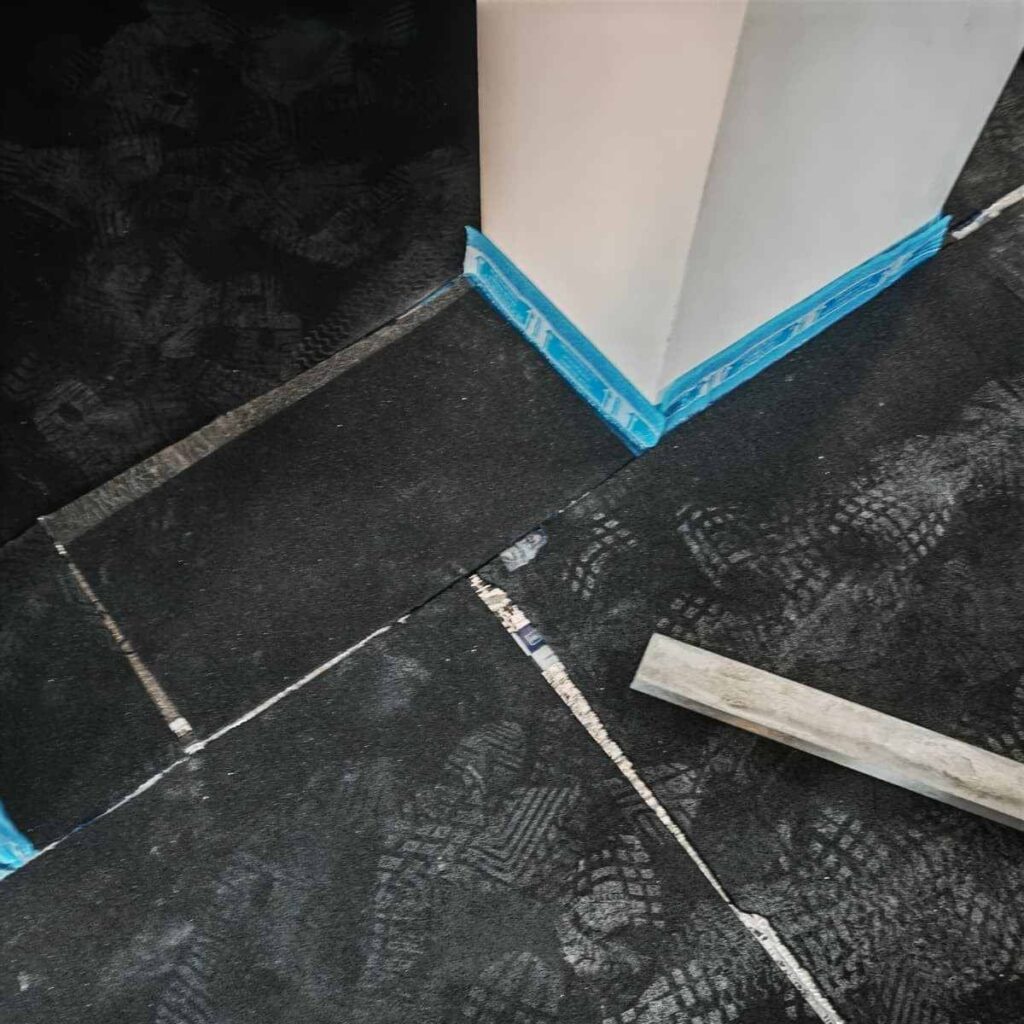
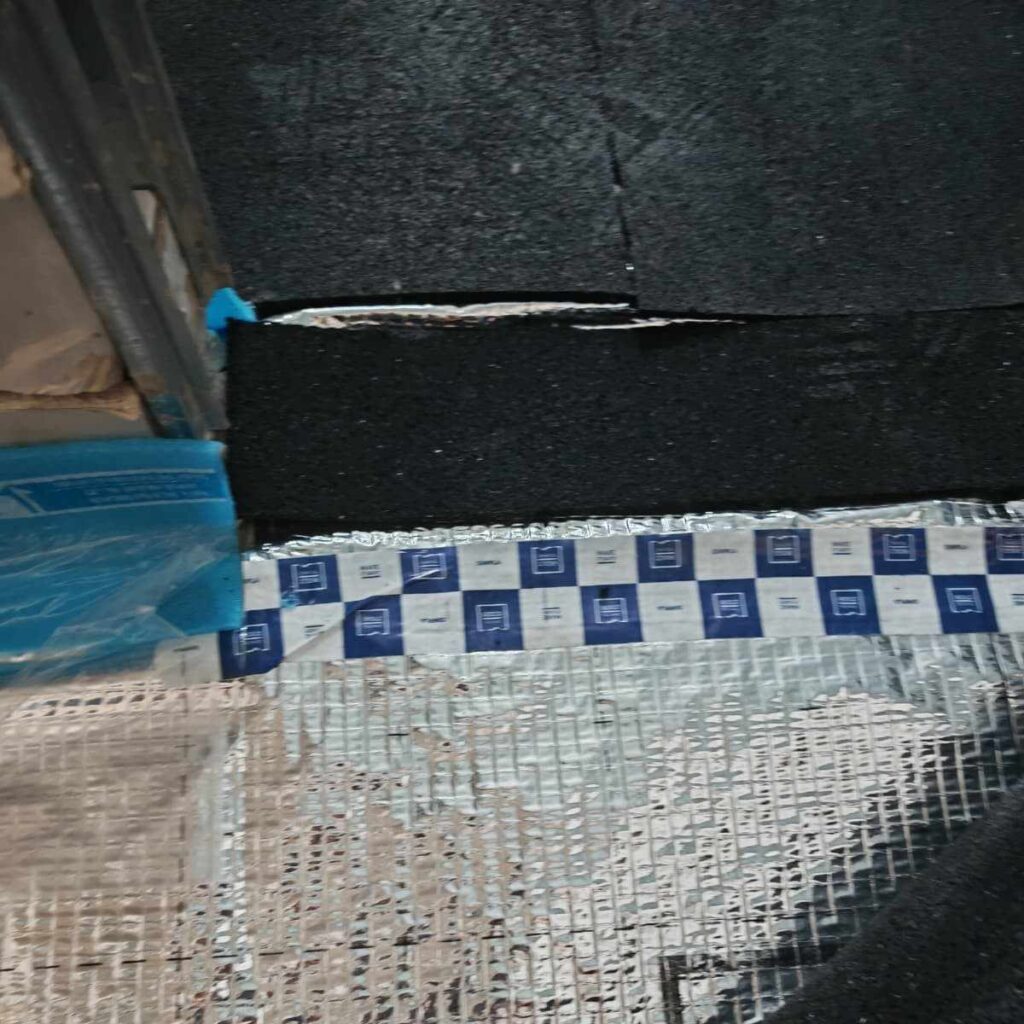
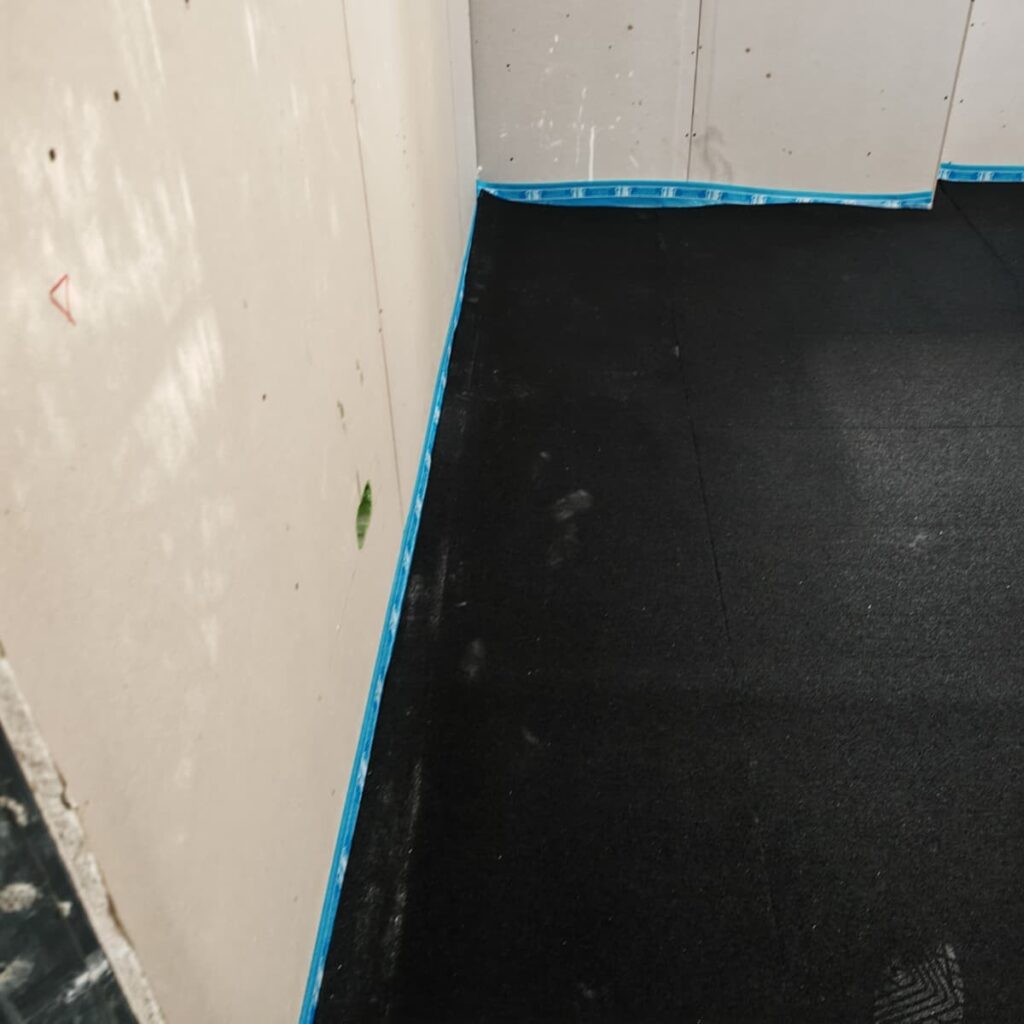
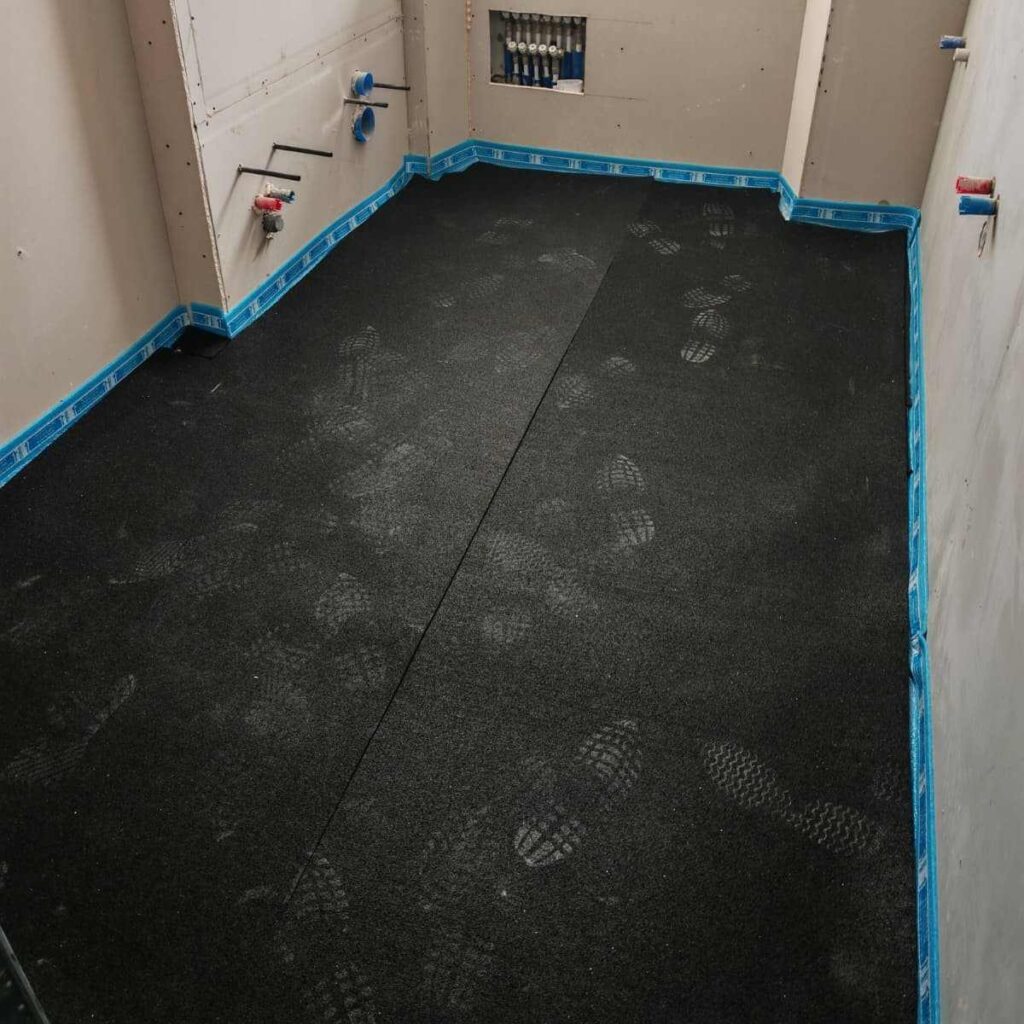
The installation of PRISMI MGE follows a precise sequence to ensure optimal performance:
1. Decouple all walls at the base with MGEF perimeter strip with width equal to or greater than vertical partitions.
2. Install all hydro-thermo-electric systems and the lightweight screed to obtain a uniform planar surface.
3. Install between wall and lightweight screed the “L” strips of closed-cell expanded polyethylene with thickness not less than 5 mm and height suitable for the stratigraphy to allow trimming after the finished floor installation.
4. Lay over the clean lightweight screed the MGE acoustic insulator over the entire slab, overlapping the perimeter strip on the horizontal section as much as possible.
5. The lateral edges of the MGE underlay must be in contact or better overlapped by 50 or 100 mm.
6. Join the perimeters with rubberized adhesive tape to avoid cracks that interrupt the acoustic insulation function.
7. Lay a vapor barrier like polyethylene with thickness at least 120 microns. This way, the porous texturization of the underlay remains unaltered.
8. Install the underfloor heating system if provided and complete the final stratigraphy with finishing screed and floor.
Compatible with self-leveling screeds, floating floors, ceramic, parquet, or laminates. Resists loads up to 5 kN/m², without special adhesives in dry applications. Lightweight rolls at 2.25 kg/m² facilitate transport and laying.
Applications in the Construction Sector
PRISMI MGE is versatile for floor sound insulation in residential contexts (multi-story apartments to reduce neighbor noises), commercial (offices and shops for productive comfort), and industrial (machine rooms to dampen machinery vibrations).
Used as recycled rubber underfloor in renovations, where reduced thicknesses avoid excessive heights, or in new constructions for compliance with DPCM 5/12/1997 on passive acoustic requirements.
In floating screeds, it creates complete structural disconnection, eliminating acoustic bridges.
Examples: hotels for quiet rooms, schools for focused classrooms, hospitals for serene environments. Suitable for radiant systems, maintaining thermal efficiency (conductivity 0.094 W/mK).
Benefits for Distributors and Installers
Economic Efficiency
Competitive cost per m², with installation time reductions of 25-30% thanks to lightweight rolls (2.25 kg/m²). High durability minimizes maintenance callbacks, increasing customer satisfaction.
Environmental and Market Benefits
Aligned with green trends, it attracts building distributors focused on sustainability. International market: export-ready for USA, UK, UAE with global certifications.
Technical Support
Prismi offers advice on installation, acoustic calculations, and customizations, facilitating conversions for large distributors. Dynamic stiffness values from accredited tests available upon request.
Are you a distributor of acoustic products? We're here to serve you.
Want to improve the soundproofing of your customers’ spaces? Do you need rubber underlays or screeds, or personalized technical advice? Contact us now: our team will provide you with all the technical and sales information, along with a customized B2B quote.
Comparison with Alternative Materials
To highlight the advantages of PRISMI MGE over polyethylene solutions, here is a comparison table on key aspects:
Aspect | Acoustic Rubber Underlay MGE | Polyethylene Underlay |
Durability and Performance Stability | Unaltered shape memory over time with stable performance. | Low mechanical resistance to weight; ΔLw efficiency drops drastically in a few years. |
Acoustic Performance and Screed Compatibility | Higher ΔLw per thickness and suitable for overlying screed thicknesses from 3 to over 10 cm, enhancing performance. | Not suitable for standard market screeds due to quick crushing after screed laying. |
Environmental Sustainability | High sustainability with A+ Remade classification for minimum recycled content over 92%. | Low sustainability with minimal use of recyclates inside. |
This comparison underscores how PRISMI MGE offers a superior solution in terms of longevity, acoustic effectiveness, and environmental impact, ideal for projects requiring reliability and green compliance.
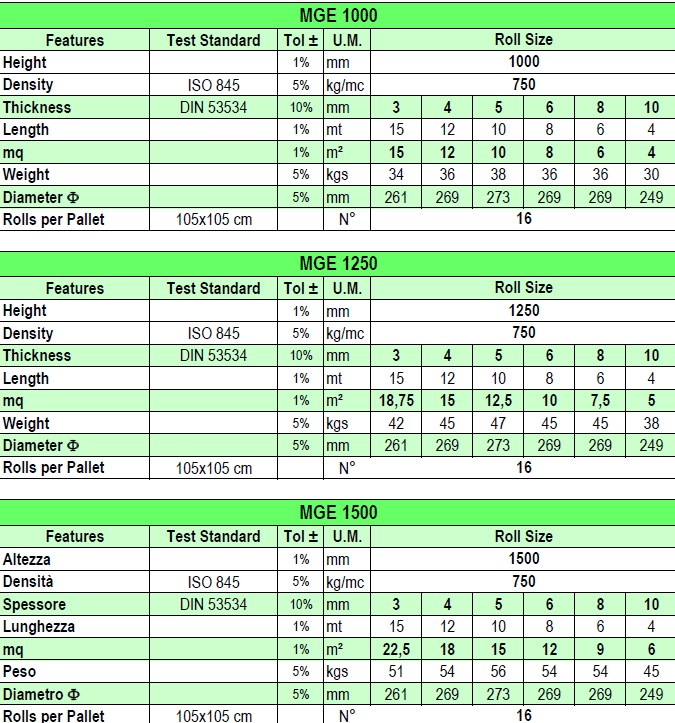
Detailed Technical Specifications
- Dimensions: Thickness 3-10 mm; Width 1-1.5 m; Length on request.
- Performance: Dynamic stiffness from 58 MN/m³ (3 mm) to 31 MN/m³ (10 mm); ΔLw from 18 dB upwards.
- Materials: 92% recycled SBR rubber; Non-toxic polyurethane binders.
- Installation: Sub-screed, with perimeter tape; Avoid acoustic bridges by upturning on walls. Weight 2.25 kg/m².
- Certifications: UNI EN ISO 10140-3, CAM.
- Recyclability: the entire product line is 100% recyclable. If disposed of clean and free of debris, each unit can be processed under EER code 070213. Our company is authorized to recover and enhance rubber residues in accordance with environmental regulations.
Frequently Asked Questions on acoustic rubber underlay
What is a sub-screed acoustic underlay and how does PRISMI MGE work?
A sub-screed acoustic underlay is a resilient insulator laid under the screed to reduce footfall noises. PRISMI MGE uses recycled rubber to absorb vibrations, achieving ΔLw from 18 dB upwards based on thickness.
What are common mistakes in installing anti-impact underlay?
Avoid laying before systems to prevent tears; ensure wall upturns and joints with adhesive tape to eliminate acoustic bridges; don’t forget the vapor barrier to maintain underlay porosity; follow the sequence: decouple walls, systems, L strips, MGE laying with 50-100 mm overlaps, jointing, vapor barrier, radiant system, and finishing.
Is PRISMI MGE compatible with underfloor heating systems?
Yes, it maintains both thermal and acoustic efficiency. It is installed beneath the vapor barrier and below the radiant heating system, with a thermal conductivity ranging from 0.094 W/mK (3 mm thickness) up to 0.160 W/mK (10 mm thickness).
How long does a recycled rubber roll like PRISMI MGE last?
Over 20 years with proper installation, resistant to compression (up to 5 kN/m²), humidity, and mold.
Does PRISMI MGE meet green building requirements like CAM?
Yes, with 92% recycled, compliant with CAM and reduces environmental impact (up to 2 kg CO2/m² saved).
What is the ideal thickness for sub-screed sound insulation?
From 3-10 mm depending on load and required performance; 3 mm for ΔLw 18 dB and stiffness 58 MN/m³, 10 mm for higher values with stiffness 31 MN/m³; choose based on accredited tests.
What is the difference between MGE and standard polyethylene foam underlay?
MGE recycled SBR rubber underlay maintains its acoustic performance over the full lifetime of the floor. Polyethylene foam loses ΔLw efficiency within a few years due to permanent compression under screed load. MGE delivers consistent, lab-certified impact sound reduction — no degradation over time.