Prismi srl Logo organization
  • HOME
  • SERVICE
  • RUBBER ROLLS PRODUCTIONS
    • ACOUSTIC RUBBER ROLLS
    • ACOUSTIC RUBBER CORK ROLLS
    • RUBBER WALL BREAK STRIP
    • Rubber Panel Partition Walls
  • NEWS
    • VIDEO
  • CONTACT
    • Cookie Policy (EU)
    • Privacy Policy
  • English
    • Italian
    • French
    • Spanish
    • German

Type To Search

Prismi srl Logo organization
  • HOME
  • SERVICE
  • RUBBER ROLLS PRODUCTIONS
    • ACOUSTIC RUBBER ROLLS
    • ACOUSTIC RUBBER CORK ROLLS
    • RUBBER WALL BREAK STRIP
    • Rubber Panel Partition Walls
  • NEWS
    • VIDEO
  • CONTACT
    • Cookie Policy (EU)
    • Privacy Policy
  • English
    • Italian
    • French
    • Spanish
    • German
  • HOME
  • SERVICE
  • RUBBER ROLLS PRODUCTIONS
    • ACOUSTIC RUBBER ROLLS
    • ACOUSTIC RUBBER CORK ROLLS
    • RUBBER WALL BREAK STRIP
    • Rubber Panel Partition Walls
  • NEWS
    • VIDEO
  • CONTACT
    • Cookie Policy (EU)
    • Privacy Policy
  • English
    • Italian
    • French
    • Spanish
    • German
Prismi srl Logo organization

Type To Search

  • English
    • Italiano
    • Français
    • Español
    • Deutsch
Prismi srl Logo organization
  • HOME
  • SERVICE
  • RUBBER ROLLS PRODUCTIONS
    • ACOUSTIC RUBBER ROLLS
    • ACOUSTIC RUBBER CORK ROLLS
    • RUBBER WALL BREAK STRIP
    • Rubber Panel Partition Walls
  • NEWS
    • VIDEO
  • CONTACT
    • Cookie Policy (EU)
    • Privacy Policy
  • English
    • Italian
    • French
    • Spanish
    • German
acoustic rubber rolls

5mm vs 10mm Acoustic Rubber Underlay: Which Thickness for Which Floor
5mm vs 10mm Acoustic Rubber Underlay: Which Thickness for Which Floor

Thickness selection for acoustic underlay isn’t just about performance, it also depends on the flooring system it needs to sit beneath.

What Changes Between 5mm and 10mm

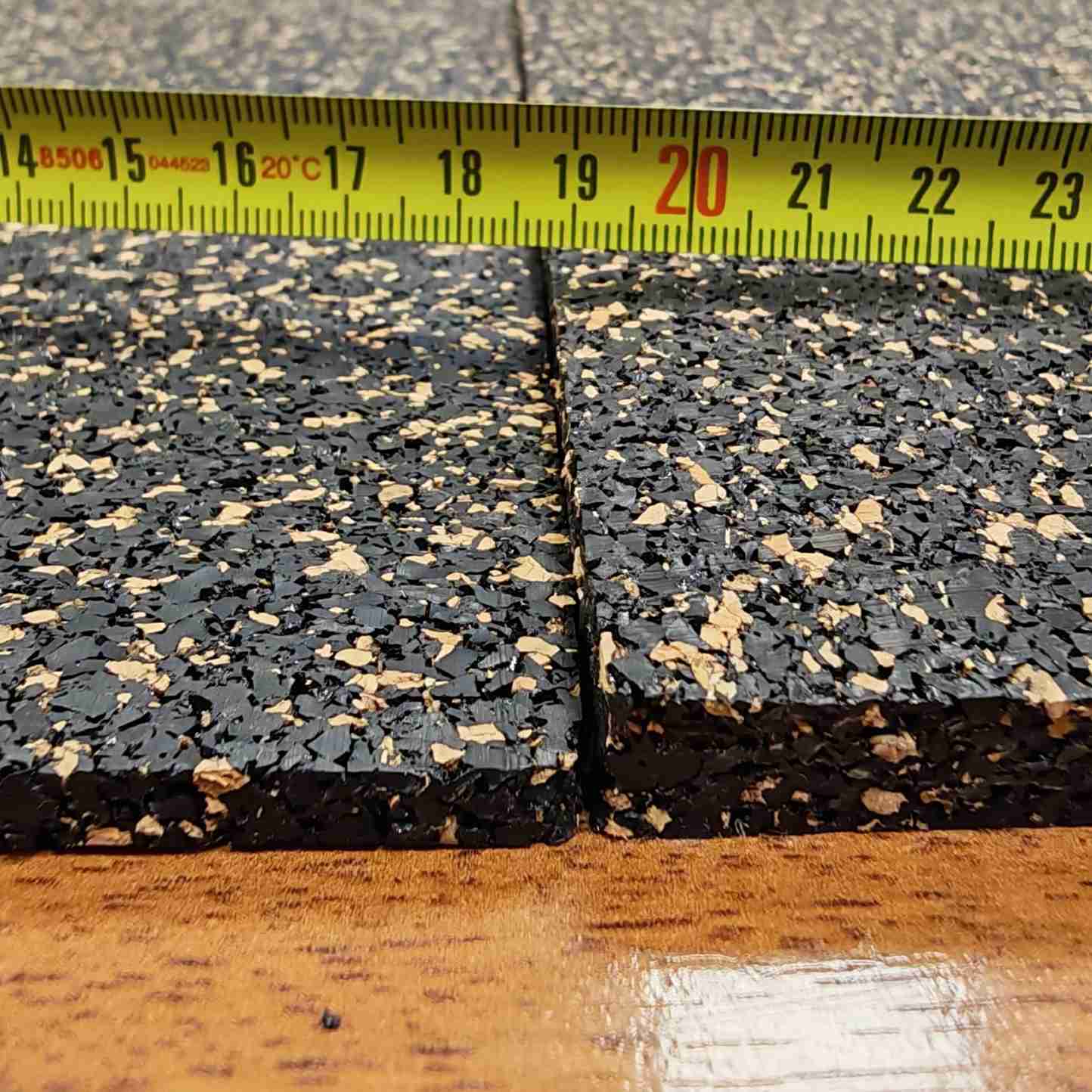
A 5mm acoustic rubber underlay provides a good balance of noise reduction and minimal added floor height, making it suitable for most residential renovation projects using engineered wood, laminate or resilient flooring.

A 10mm acoustic underlay offers meaningfully higher impact noise reduction but requires more clearance and is generally reserved for projects where acoustic performance is the primary specification driver.

Lorem ipsum dolor sit amet, consectetur adipiscing elit. Ut elit tellus, luctus nec ullamcorper mattis, pulvinar dapibus leo.

5mm: The Practical Default

For the majority of residential and light commercial floor acoustic underlay applications, 5mm rubber strikes a workable balance, enough density to meaningfully reduce footstep noise without complicating door clearances, transition strips or threshold heights during renovation.

10mm: When Performance Is the Priority

Projects with strict building code requirements for impact noise (multi-family residential, hospitality, healthcare) often specify 10mm or thicker acoustic underlayment, particularly over concrete slabs where floor height is less constrained than in timber-frame retrofit projects.

The added thickness delivers a measurable improvement in Impact Insulation Class ratings.

Matching Thickness to Flooring Type

Rigid flooring systems (engineered wood, laminate with click-lock systems) generally tolerate thicker underlay well.

Carpet installations are more flexible on underlay thickness but should always confirm compatibility with the carpet backing and any warranty requirements from the carpet manufacturer before finalizing a floor acoustic underlay specification.

What Happens If You Choose the Wrong Thickness

Specifying too thin an underlay for a project with strict acoustic requirements is the more common error, since it usually shows up only after installation, when noise complaints continue despite the underlay being present.

Specifying too thick an underlay, on the other hand, can create practical problems: door clearances that no longer work, uneven transitions to adjacent rooms with different flooring, or excessive “give” underfoot with certain rigid flooring systems that can affect the long-term integrity of click-lock joints.

Getting the thickness right the first time, based on the actual acoustic requirement rather than a default assumption, avoids both categories of problem.

When in Doubt, Ask for the Data

If a project’s acoustic requirement isn’t clearly defined upfront, the safest approach is to request tested performance data for both 5mm and 10mm options from the supplier.

Compare the actual figures against the building’s requirement or the client’s expectation, rather than guessing based on thickness alone.

This small extra step at the specification stage avoids costly rework later.

Worth a look too: Acoustic Underlay for Carpets & Floors hub, Acoustic Rubber Cork Rolls product page and How Thick Should a Rubber Sound Deadening Sheet Be?.

PrevBest Soundproof Underlay for Carpet: Rubber vs Foam vs Fiber

Best Soundproof Underlay for Carpet: Rubber vs Foam vs Fiber

22 August 2026

Related Posts

Read More
acoustic rubber rolls
2 September 2025by think green

How to reduce footstep noise at home

How to reduce footstep noise at home Footstep noise is...
Read More
acoustic rubber rolls
18 August 2026by think green

Sound Deadening Sheets vs Foam: What’s the Real Difference

Sound Deadening Sheets vs Foam: What's the Real Difference...
Recent Posts
  • 5mm vs 10mm Acoustic Rubber Underlay: Which Thickness for Which Floor
  • Best Soundproof Underlay for Carpet: Rubber vs Foam vs Fiber
  • Acoustic Underlay for Carpets & Floors: The Complete Guide
  • Impact Noise vs Airborne Noise: Which Flooring Solution You Need
  • Subfloor Noise Reduction: Rubber Underlayment Explained
Archives
  • August 2026
  • June 2026
  • March 2026
  • February 2026
  • January 2026
  • December 2025
  • September 2025
  • August 2025
  • July 2025
  • June 2025
Categories
  • acoustic rubber rolls

Copyright © 1990-2026 Prismi - All Rights Reserved Prismi srl - via dell'industria 44 63076 Monteprandone (AP) Italy - P.IVA 01396170449

Top
Soundproof rubber rolls
Manage Consent
To provide the best experiences, we use technologies like cookies to store and/or access device information. Consenting to these technologies will allow us to process data such as browsing behavior or unique IDs on this site. Not consenting or withdrawing consent, may adversely affect certain features and functions.
Functional Always active
The technical storage or access is strictly necessary for the legitimate purpose of enabling the use of a specific service explicitly requested by the subscriber or user, or for the sole purpose of carrying out the transmission of a communication over an electronic communications network.
Preferences
The technical storage or access is necessary for the legitimate purpose of storing preferences that are not requested by the subscriber or user.
Statistics
The technical storage or access that is used exclusively for statistical purposes. The technical storage or access that is used exclusively for anonymous statistical purposes. Without a subpoena, voluntary compliance on the part of your Internet Service Provider, or additional records from a third party, information stored or retrieved for this purpose alone cannot usually be used to identify you.
Marketing
The technical storage or access is required to create user profiles to send advertising, or to track the user on a website or across several websites for similar marketing purposes.
  • Manage options
  • Manage services
  • Manage {vendor_count} vendors
  • Read more about these purposes
View preferences
  • {title}
  • {title}
  • {title}