

Acoustic materials supplier
Acoustic materials supplier for construction: how to choose a certified B2B partner
Choosing an acoustic materials supplier for construction is not just a purchasing decision. For contractors, distributors, resellers, technical buyers and building professionals, the right partner affects project quality, documentation, delivery continuity and the ability to offer reliable acoustic solutions to the market.
In sound insulation, especially for floors, screeds, floating floors and walls, each material must deliver measurable performance, comply with technical requirements and fit the operational needs of the construction supply chain. This is why a direct manufacturer can offer more value than a standard reseller: production control, product customization, technical support and verifiable data.
Why the supplier affects acoustic performance
An acoustic material does not perform in isolation. Its result depends on application, build-up, installation, thickness, density and correct integration with the surrounding construction elements.
For impact sound insulation, for example, the acoustic under-screed mat must be selected according to the floor-screed system and the performance required by the project. A qualified supplier should therefore provide more than rolls of material: technical datasheets, laboratory data and practical guidance for designers and installers.
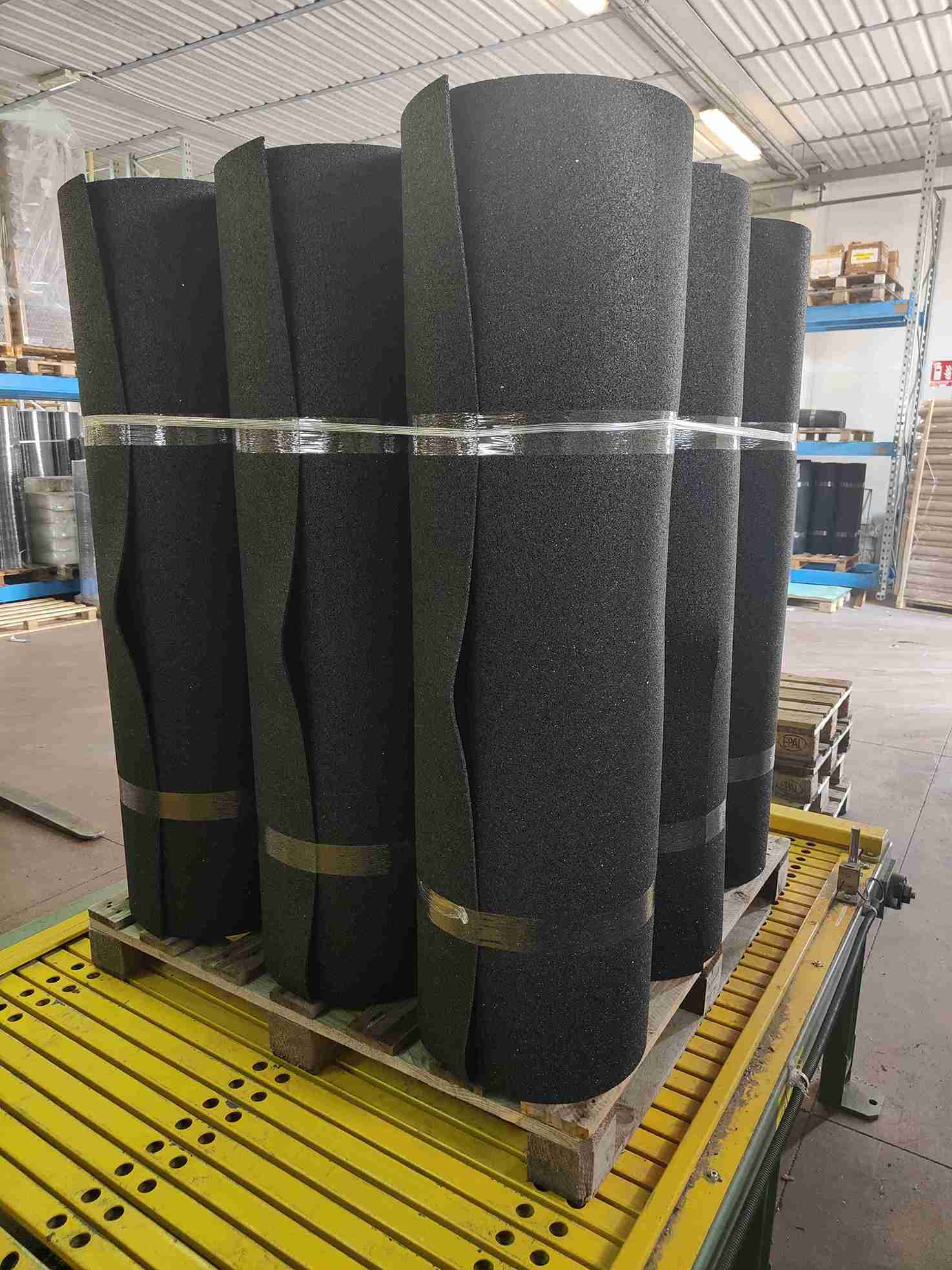
When evaluating a B2B partner, companies should check whether the supplier can provide soundproof rubber rolls for construction, resilient layers for floating screeds, underfloor mats and decoupling accessories for walls and structural junctions.

Acoustic materials required by the construction supply chain
Construction companies often need a complete range of products rather than a single item. The most requested materials include solutions for floors, underfloors, walls and contact points between structural elements.
Acoustic under-screed mats
The acoustic under-screed mat is used in floating screed systems to reduce impact sound transmission. It is suitable for new buildings, renovations, residential blocks, hospitality projects, public buildings and jobs where documented acoustic performance is required.
Rubber-cork underfloor mats
The rubber-cork underfloor mat is designed for floating floors, parquet, laminate and LVT. The combination of rubber and cork offers a balanced mix of resilience, stability and acoustic comfort.
Acoustic wall strips and decoupling
The acoustic wall strip helps reduce vibration transmission between masonry, slabs and vertical partitions. It is a small component compared with the complete system, but it can be important for final acoustic quality.
How to evaluate a B2B acoustic materials supplier
A professional supplier for business customers should be assessed through technical, production and documentation criteria. Price matters, but it cannot be the only parameter when materials are used in specifications, acoustic projects or ongoing supply agreements.
Certifications and laboratory tests
Tests according to recognized standards, such as EN ISO 10140-3 for impact sound insulation, are essential. Technical data help designers, distributors and contractors propose the right product and document its performance.
A reliable supplier should provide datasheets, installation guidance, information on thicknesses and formats, dynamic stiffness values, impact sound reduction data and compatibility with different floor build-ups.
Recycled content, CAM and DNSH requirements
Sustainability is now a real decision factor in construction. Materials with recycled content and documentation related to environmental criteria can be decisive in public tenders, certified buildings and structured procurement processes.
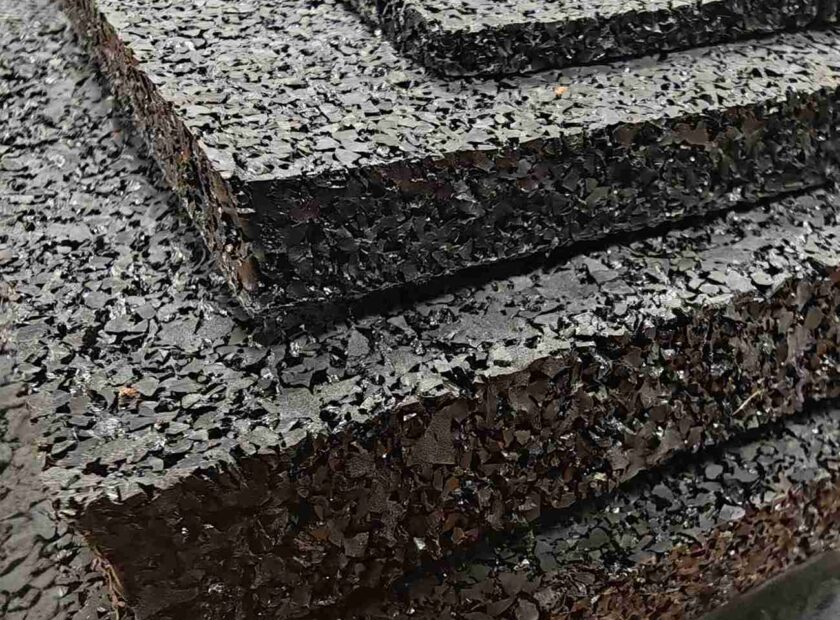
Recycled SBR rubber, when properly manufactured and controlled, is a strong technical solution because it combines sound insulation performance, material recovery and applicability in different construction systems.
Production continuity and B2B availability
For distributors, wholesalers and contractors, supply continuity is critical. An industrial partner must be able to manage recurring orders, pallets, standard formats, custom cuts and delivery schedules aligned with construction planning.
This is where a manufacturer of recycled rubber rolls for sound insulation can offer more control than a longer commercial chain.
Direct manufacturing, private label and custom formats
In the B2B market, many companies are not just looking for a product, but for an industrial service. Resellers, distributors and technical brands may need private label products, dedicated formats, customized packaging or specifications tailored to their own catalogue.
The production of acoustic rubber and cork mats can respond to different needs: standard rolls, jumbo rolls, custom cuts, different thicknesses and solutions for specific applications. This flexibility is particularly useful for companies building a stable and recognizable product range.
An advanced supplier should also support customers in selecting the most suitable solution, helping them distinguish between under-screed, underfloor, wall decoupling, anti-vibration and other technical uses.
When to choose rubber, rubber-cork or acoustic strips

The choice depends on the application. Recycled SBR rubber is often suitable under screeds, where resilience, strength and impact sound reduction are required. Rubber-cork may be preferred under floating floors, when a stable and thin support is needed for parquet, laminate or LVT.
Acoustic strips do not replace mats; they complete the system. They separate construction elements and reduce vibration transmission at critical points.
For this reason, a specialist supplier should think in terms of systems, not just products. The goal is to help the B2B customer identify the solution that best fits the technical, commercial and regulatory context.
Why choose a technical supplier for construction
In acoustic construction products, reliability comes from the combination of manufacturing experience, measurable data and practical support for the supply chain. A direct manufacturer can assist distributors, contractors and designers with certified materials, technical documentation, samples, customization and ongoing supply.
For B2B companies, choosing an acoustic materials supplier for construction means finding a partner able to turn a technical requirement into a solution ready for site use, catalogue integration or professional distribution.
A complete range of acoustic rolls, rubber-cork mats and wall strips allows companies to cover different applications without splitting purchases among several suppliers. This simplifies commercial management, improves technical consistency and makes the relationship between manufacturer, reseller and final user more efficient.
To evaluate materials, formats, certifications and B2B supply conditions, the most useful next step is to request samples, technical datasheets or a B2B quotation directly from the manufacturer.
How do you choose an acoustic materials supplier for construction?
Choose a supplier by checking laboratory tests, technical datasheets, production capacity, supply continuity, B2B support, samples and materials suitable for construction site requirements.
Can a B2B supplier produce acoustic mats in private label?
Yes, if the supplier is a direct manufacturer. Private label supply may include custom formats, dedicated thicknesses, labels, packaging, standard rolls or custom cuts for resellers and distributors.
Which certifications should be requested for construction acoustic materials?
It is useful to request acoustic tests according to recognized standards, updated datasheets, impact sound performance data, VOC information, environmental documentation and recycled content data.
Is it better to buy from a manufacturer or from a reseller?
For B2B companies, distributors and contractors, buying from a direct manufacturer can offer more control over quality, documentation, availability, customization and supply conditions.