Acoustic Insulation Laboratory Testing of Rubber-Cork Mats MGC 3 and MGC 5: Results ISO 10140-3.

Acoustic Insulation Laboratory Testing of Rubber-Cork Mats MGC 3 and MGC 5: Results ISO 10140-3.
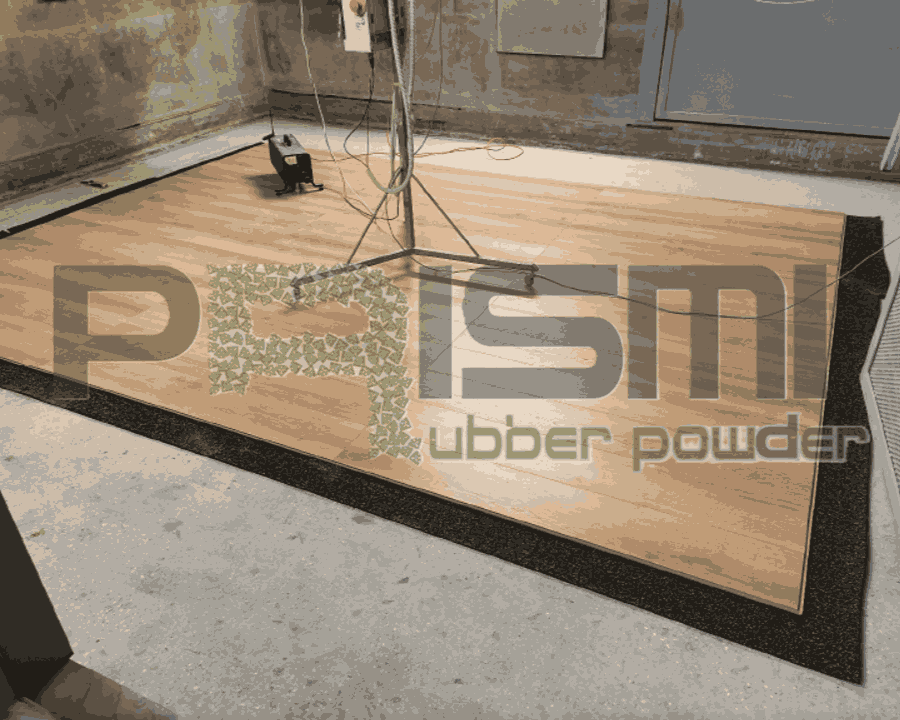
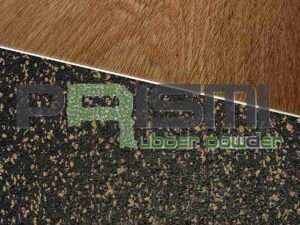
The acoustic floor underlays MGC 3 and MGC 5 by PRISMI are rolls of recycled rubber mixed with cork and densified with polyurethane resins, designed for impact sound insulation under parquet and laminates in construction and renovations.
Both models were tested in an accredited laboratory according to UNI EN ISO 10140-3:2021, achieving certified impact sound reduction ΔLw 18 dB for MGC 3 (3 mm) and ΔLw 20 dB for MGC 5 (5 mm).
Analyzing the accredited test reports (n. 437866 for MGC 3 and n. 437867 for MGC 5, both dated 18 February 2026), the MGC underlays stand out in the building sector for their nominal density of 720 kg/m³, thicknesses of 3 mm and 5 mm, and surface mass 2.2–3.6 kg/m².
Both effectively reduce vibrations across the entire 100-5000 Hz spectrum, with final Ln,r,w of 60 dB (MGC 3) and 58 dB (MGC 5) versus 78 dB of the reference floor, and very low measurement uncertainty (U(ΔLw) ±1.7 dB for MGC 3 and ±1.6 dB for MGC 5).
This makes them the ideal choice for building distributors and large retailers seeking EU-compliant solutions, balancing top acoustic performance, sustainability (recycled rubber + natural cork) and easy installation, perfect for international projects and green certifications.
Introduction to Impact Sound Insulation Lab Tests for Floor Underlays

The MGC 3 and MGC 5 acoustic underlays by PRISMI offer a technical and sustainable solution to reduce impact noise.
Made with recycled rubber granules mixed with cork and densified with polyurethane resins, these products underwent rigorous testing in the accredited laboratory (reports n. 437866 for MGC 3 and 437867 for MGC 5, issued on 18 February 2026) according to UNI EN ISO 10140-3:2021.
The results are clear:
- MGC 3 (3 mm thickness, nominal density 720 kg/m³) → ΔLw = 18 dB ±1.7 dB)
- MGC 5 (5 mm thickness) → ΔLw = 20 dB ±1.6 dB)
Both models significantly reduce the normalized impact sound pressure level (Ln,r,w = 60 dB for MGC 3 and 58 dB for MGC 5 versus 78 dB of the reference floor), providing excellent insulation against footsteps, falling objects and impact noise in residential and commercial environments.
Technical Description of MGC 3 and MGC 5 Underlays
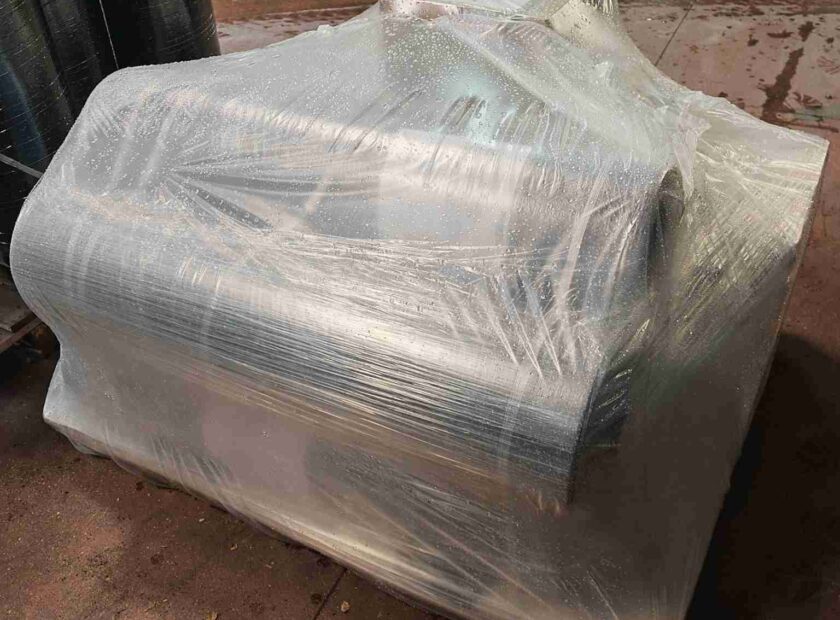
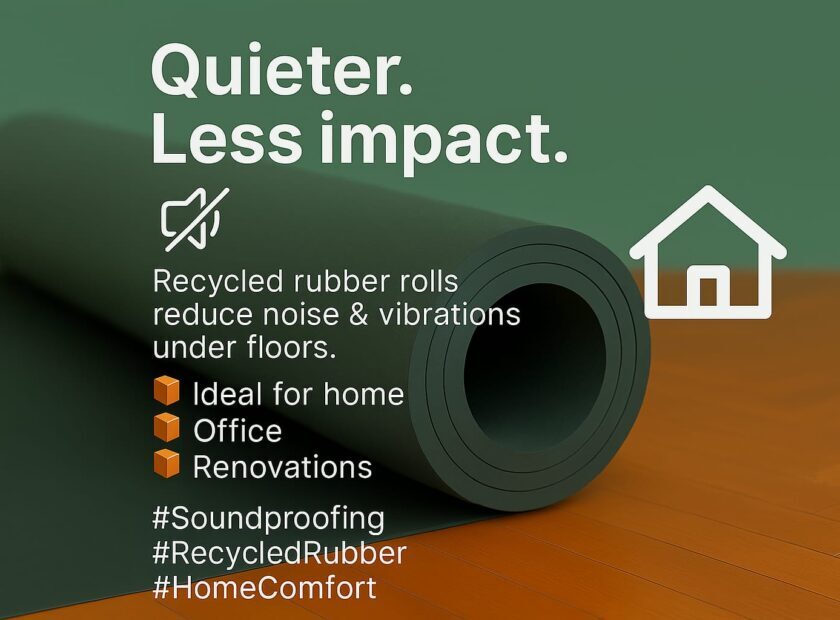
The MGC underlays are rolls of rubber-cork acoustic material specifically designed for impact noise attenuation under flooring.
Manufactured entirely in Italy by PRISMI, they use eco-friendly materials: recycled rubber for elasticity and natural cork for acoustic absorption.
Main characteristics measured during testing
- Roll width: 1000 mm
- Effective acoustic surface: 10.8 m²
- Surface mass: 2.2 kg/m² (MGC 3) – 3.6 kg/m² (MGC 5)
- Total thickness with test laminate: 14.8 mm (MGC 3) – 16.8 mm (MGC 5)
During testing, the samples were laid on a normalized heavyweight reference floor (150 mm thick, 5 × 5.5 m) and covered with a wood-fiber laminate (11.8 mm, 10.2 kg/m²). Installation is extremely simple: the rolls are simply butted together without adhesives. For full product details and the A-VOC certificate, see the rubber-cork acoustic rolls page and the A-VOC safety and quality certificate.
Test Methodology According to UNI EN ISO 10140-3:2021
The tests were performed in test chambers (source room volume 58.3 m³, receiving room 90.5 m³) using the standardized Nor 277 tapping machine in 6 different positions.
Sound pressure levels were measured in 1/3-octave bands from 100 Hz to 5000 Hz. The reduction ΔL is calculated as the difference between the bare floor level (Ln,0) and the level with the underlay (Ln).
The single-number quantities ΔLw and the spectrum adaptation term CL,Δ are derived from UNI EN ISO 717-2:2021.
Environmental conditions complied with standard requirements (atmospheric pressure 108069 Pa).
The internal procedure ensures repeatability and reliability. No visible damage was observed on the samples after testing.
Equipment Used
- LEM Energy 2 power amplifier
- Sinus Soundbook real-time analyzer
- PCB 2560 microphones with preamplifier
- Fixed dodecahedral loudspeakers
Detailed Results and Comparison between MGC 3 and MGC 5
The tests demonstrate highly effective impact noise reduction. Here is the partial table with the most representative frequencies (first three bands and highest band):
Frequency (Hz) | Ln,0 (dB) | ΔL MGC 3 (dB) | ΔL MGC 5 (dB) |
100 | 61.6 | 1.7 | 2.0 |
125 | 69.7 | 3.1 | 2.2 |
160 | 69.6 | 1.0 | 2.6 |
… | … | … | … |
5000 | 72.3 | 56.3 | 61.0 |
MGC 5 delivers superior performance especially in the mid and high frequencies, making it the ideal choice for noise-sensitive environments. Both products fully meet the acoustic comfort requirements of Italian and European regulations
Compliance with European Legislation
The obtained values comply with Italian DPCM 5 December 1997 and EU directives on sound insulation. The A-VOC certificate guarantees extremely low emissions of volatile organic compounds, making MGC underlays suitable for LEED-certified buildings and green projects.
Practical Applications in Construction and Renovations
The MGC 3 and MGC 5 underlays are perfect for:
- Residential renovations (apartments, villas)
- Offices and commercial spaces
- Hotels and hospitality facilities
They are easily installed under parquet, laminate or other floating floors, reducing impact noise by 18-20 dB without excessively increasing the floor package thickness.
Competitive Advantages and International Market
Compared to other products on the market PRISMI MGC underlays combine optimal density (720 kg/m³), high-quality recycled materials and ACCREDIA-accredited testing.
For building distributors they represent a competitive, sustainable and certified solution, ideal for both the Italian market and export to Europe and beyond.
Frequently Asked Questions about Rubber-Cork Underlay Soundproofing
What is UNI EN ISO 10140-3:2021?
It is the international standard for laboratory measurement of impact sound insulation provided by floor coverings
What is the difference between MGC 3 and MGC 5?
MGC 3 (3 mm) reduces 18 dB, MGC 5 (5 mm) reduces 20 dB and performs better in mid-high frequencies.
How do you install a rubber-cork acoustic underlay?
Simply butt the rolls on a clean subfloor and cover directly with the final flooring (parquet, laminate, etc.) without adhesives.
Are MGC underlays eco-friendly?
Yes, they are made with recycled rubber and natural cork and hold the A-VOC certificate for low emissions.
What noises do acoustic floor underlays reduce?
Mainly impact noise from footsteps and falling objects, with attenuation from 18 to 20 dB across the entire 100-5000 Hz spectrum.
Where can I buy PRISMI MGC acoustic underlays?
Contact authorized building material distributors or request a B2B quote directly from the product pages on the website.