

Impact Noise vs Airborne Noise: Which Flooring Solution You Need
Impact Noise vs Airborne Noise: Which Flooring Solution You Need
Specifying the wrong noise-reduction strategy is the most common, and most expensive, mistake in floor soundproofing projects.
Two Different Problems, Two Different Solutions
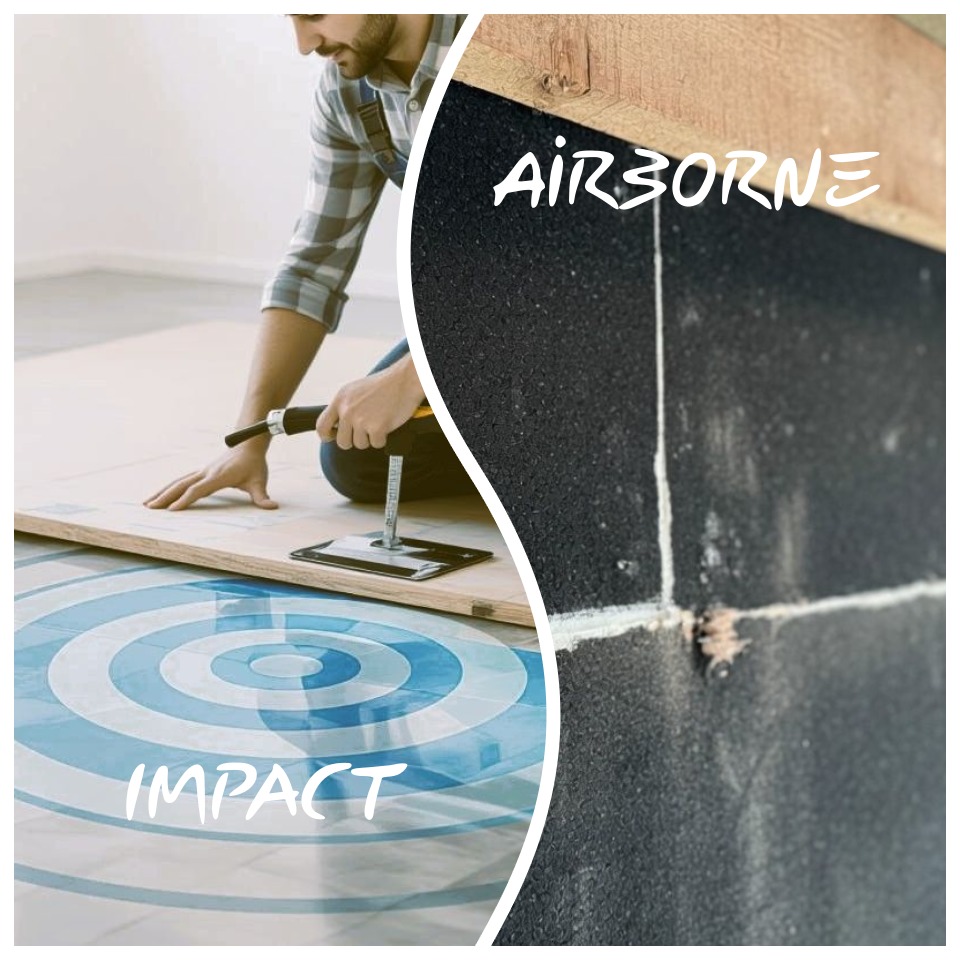
Floor soundproofing requires identifying which category of noise a project needs to control. Impact noise results from direct contact, footsteps, furniture, dropped items, and is measured using the Impact Insulation Class (IIC) or equivalent Ln,w rating. Airborne noise, voices, television, traffic, passes through air and structure, and is measured using Sound Transmission Class (STC) or Rw.
Solving for Impact Noise
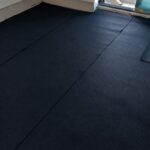
A resilient rubber underlayment beneath the finished floor is the primary defense against impact noise, because it absorbs the initial impact energy before it can transfer into the structure. This is the correct solution for most residential floor soundproofing complaints, footsteps heard from the room below.
Solving for Airborne Noise
Airborne noise reduction depends more on total system mass and sealing than on any single underlayment layer. A floor assembly with a dense rubber or rubber-cork layer, combined with a mass-adding ceiling treatment below (such as resilient channels and added drywall layers), addresses airborne transmission far more effectively than underlayment alone.
Why Most Projects Need Both
In practice, sound proof flooring projects that only address one type of noise often leave clients dissatisfied, because most real-world complaints involve a mix of impact and airborne sound. A correctly specified rubber underlayment handles the impact component; pairing it with adequate ceiling or wall mass below addresses the rest, the two strategies are complementary, not interchangeable.
What We Ask Before Recommending Anything
We won’t specify a product until we’ve asked three things: is the complaint about specific impacts (footsteps, dropped objects) or continuous sound (voices, TV, music)? Is it coming through the floor, or could it be sneaking in through the walls or ductwork instead? And has the flooring type changed recently, because ripping out carpet for hardwood is, in our experience, the single most common trigger for a noise complaint that didn’t exist the month before. Skip these questions and you’ll end up specifying an underlayment for a problem that’s actually coming from somewhere else entirely, which happens more often than you’d think.
When to Bring in an Acoustic Consultant
For straightforward residential retrofit cases, a well-specified rubber underlayment based on the guidance above is usually sufficient. For multi-unit developments, commercial leases with contractual noise limits, or any project where documented compliance with a building code will be required, involving an acoustic consultant early, before flooring is selected, is worth the added cost, since it avoids the far more expensive scenario of retrofitting a floor a second time after an installed solution fails to meet its target. Worth a look too: Soundproof Flooring Guide hub, Rubber Panels for Partition Walls MGEL and Acoustic Rubber Cork Rolls product page.