Prismi srl Logo organization
  • INICIO
  • SERVICIO
  • Producción rollos de caucho
    • ROLLOS DE CAUCHO ACÚSTICO
    • ROLLOS DE CAUCHO CORCHO ACÚSTICO
    • Banda acústica de caucho MGEF
    • Plancha de caucho acústico
  • NOTICIAS
    • VIDEO
  • CONTACTO
    • Privacy Policy
  • Español
    • Inglés
    • Italiano
    • Francés
    • Alemán

Escribe para buscar

Prismi srl Logo organization
  • INICIO
  • SERVICIO
  • Producción rollos de caucho
    • ROLLOS DE CAUCHO ACÚSTICO
    • ROLLOS DE CAUCHO CORCHO ACÚSTICO
    • Banda acústica de caucho MGEF
    • Plancha de caucho acústico
  • NOTICIAS
    • VIDEO
  • CONTACTO
    • Privacy Policy
  • Español
    • Inglés
    • Italiano
    • Francés
    • Alemán
  • INICIO
  • SERVICIO
  • Producción rollos de caucho
    • ROLLOS DE CAUCHO ACÚSTICO
    • ROLLOS DE CAUCHO CORCHO ACÚSTICO
    • Banda acústica de caucho MGEF
    • Plancha de caucho acústico
  • NOTICIAS
    • VIDEO
  • CONTACTO
    • Privacy Policy
  • Español
    • Inglés
    • Italiano
    • Francés
    • Alemán
Prismi srl Logo organization

Escribe para buscar

  • Español
    • English
    • Italiano
    • Français
    • Deutsch
Prismi srl Logo organization
  • INICIO
  • SERVICIO
  • Producción rollos de caucho
    • ROLLOS DE CAUCHO ACÚSTICO
    • ROLLOS DE CAUCHO CORCHO ACÚSTICO
    • Banda acústica de caucho MGEF
    • Plancha de caucho acústico
  • NOTICIAS
    • VIDEO
  • CONTACTO
    • Privacy Policy
  • Español
    • Inglés
    • Italiano
    • Francés
    • Alemán
rollos goma acústicos

Rubber vs Mineral Wool vs Foam: Best Core Material for Partition Wall Soundproofing
Rubber vs Mineral Wool vs Foam: Best Core Material for Partition Wall Soundproofing

Not all sound insulation panels for walls work the same way. Choosing the wrong core material is a common reason partition wall systems underperform their design targets.

Three Materials, Three Mechanisms

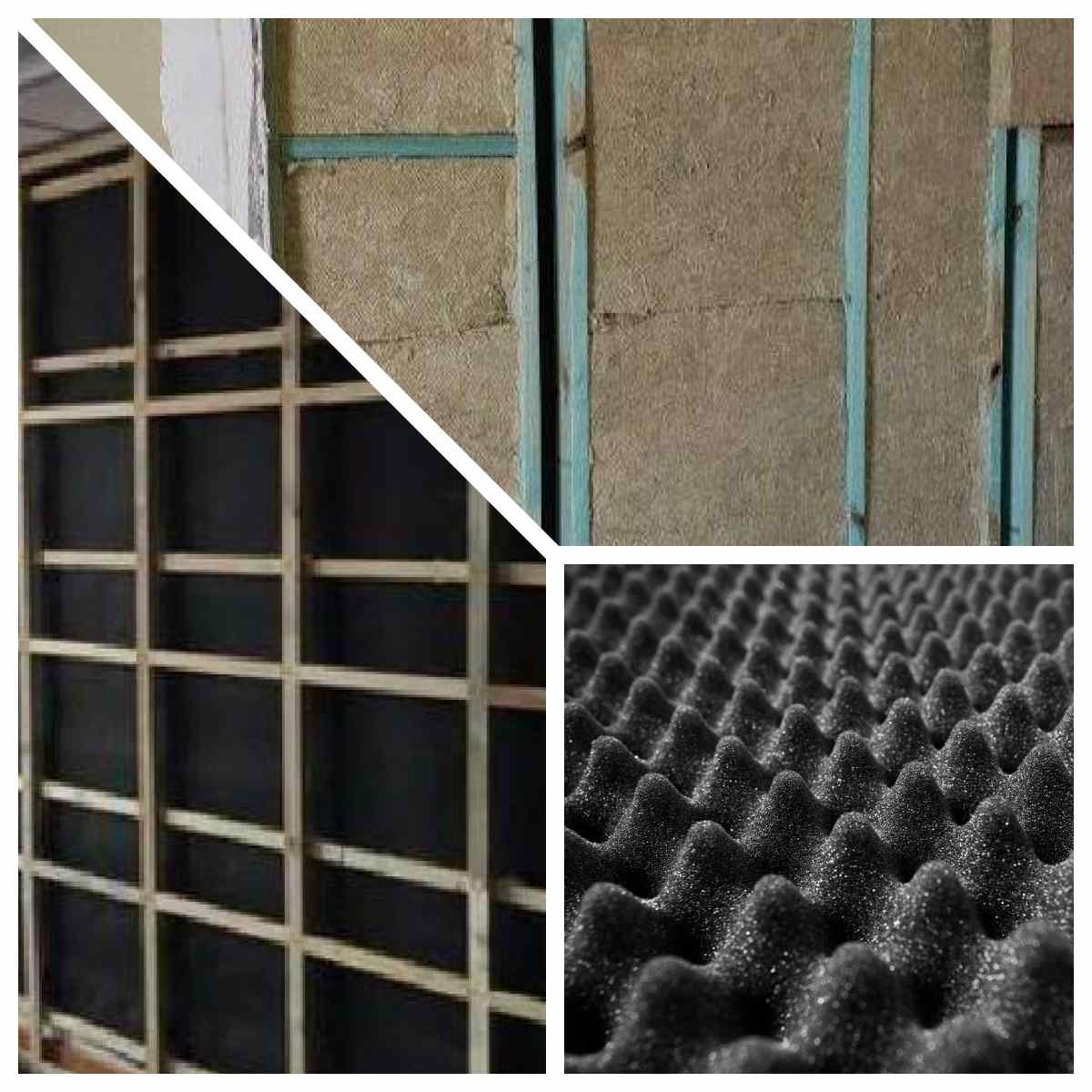
Sound insulation wall panels rely on different physical mechanisms depending on their core material.

Rubber works through mass, a dense, compact layer that resists sound transmission.

Mineral wool works through a combination of absorption and some mass, useful in cavity wall systems.

Foam works almost entirely through absorption, addressing reverberation far more than transmission.

Rubber: High Mass in Minimal Thickness

A high-density rubber panel like MGEL (700 kg/m³) delivers substantial airborne noise reduction in just 15–20 mm, which matters in retrofit projects where available wall thickness is limited.

Because it’s a solid, dimensionally stable material, it also performs consistently over time without settling or compressing the way fibrous materials can.

Mineral Wool: Good for Cavity Systems

Mineral wool is commonly used inside stud cavities in double-wall systems, offering decent absorption and moderate mass.

It performs well when cavity depth is generous but requires more thickness than rubber to achieve comparable airborne noise reduction, and its performance can degrade if compressed or improperly installed.

Foam: Limited Role in Wall Soundproofing

While noise reduction panels for walls made from foam are widely marketed, foam’s low density means it contributes little to blocking sound transmission between rooms.

It’s better suited as a surface-applied absorptive treatment than as the structural mass layer within a partition wall assembly.

Combining Materials for Best Performance

The best-performing partition wall systems often combine a rubber mass layer like MGEL with an absorptive layer (mineral wool or foam) and double drywall boards, each material addressing a different part of the acoustic problem rather than one material trying to do everything.

Cost and Space Trade-Offs Between the Three Options

Beyond raw acoustic performance, each material carries different practical trade-offs worth weighing during specification.

Rubber panels cost more per square meter than mineral wool but require less overall wall thickness to hit a given performance target, which can matter more than material cost in space-constrained retrofit projects where every centimeter of usable floor area counts.

Mineral wool is typically the lowest-cost option per square meter but needs a deeper cavity, which isn’t always available in existing construction.

Foam sits at a similar or lower price point to mineral wool but, given its limited contribution to transmission loss, is rarely cost-effective as a primary strategy for partition wall soundproofing on its own.

Worth a look too: Rubber Panels for Partition Walls hub, MGEL product page and Sound Deadening Sheets vs Foam.

PrevPartition Wall Soundproofing: A Guide to Materials and Methods

Partition Wall Soundproofing: A Guide to Materials and Methods

20 septiembre 2026

How Rw/STC Ratings Work for Partition Wall Systems

20 septiembre 2026
NextHow Rw/STC Ratings Work for Partition Wall Systems

Related Posts

Read More
rollos goma acústicos
21 agosto 2026by think green

Aislamiento Acústico de Suelos: la Guía Completa de la Reducción del Ruido de Suelo y de Base

Aislamiento Acústico de Suelos: la Guía Completa de la Reducción del Ruido de Suelo y de...
Read More
rollos goma acústicos
21 agosto 2026by think green

Reducción del Ruido de Base: la Base Acústica de Caucho Explicada

Reducción del Ruido de Base: la Base Acústica de Caucho...
Recent Posts
  • Acoustic Wall Panels vs Rubber Sound Barrier: Which Works Better for Your Project
  • Private Label Acoustic Panels: A Guide for Distributors and Manufacturers
  • How Rw/STC Ratings Work for Partition Wall Systems
  • Rubber vs Mineral Wool vs Foam: Best Core Material for Partition Wall Soundproofing
  • Partition Wall Soundproofing: A Guide to Materials and Methods
Archives
  • septiembre 2026
  • agosto 2026
  • junio 2026
  • marzo 2026
  • febrero 2026
  • diciembre 2025
  • septiembre 2025
  • agosto 2025
  • julio 2025
  • junio 2025
Categories
  • rollos goma acústicos

Copyright © 1990-2026 Prismi - All Rights Reserved Prismi srl - via dell'industria 44 63076 Monteprandone (AP) Italy - P.IVA 01396170449

Top
Soundproof rubber rolls | Prismi
Manage Consent
To provide the best experiences, we use technologies like cookies to store and/or access device information. Consenting to these technologies will allow us to process data such as browsing behavior or unique IDs on this site. Not consenting or withdrawing consent, may adversely affect certain features and functions.
Functional Siempre activo
The technical storage or access is strictly necessary for the legitimate purpose of enabling the use of a specific service explicitly requested by the subscriber or user, or for the sole purpose of carrying out the transmission of a communication over an electronic communications network.
Preferences
The technical storage or access is necessary for the legitimate purpose of storing preferences that are not requested by the subscriber or user.
Statistics
The technical storage or access that is used exclusively for statistical purposes. The technical storage or access that is used exclusively for anonymous statistical purposes. Without a subpoena, voluntary compliance on the part of your Internet Service Provider, or additional records from a third party, information stored or retrieved for this purpose alone cannot usually be used to identify you.
Marketing
The technical storage or access is required to create user profiles to send advertising, or to track the user on a website or across several websites for similar marketing purposes.
  • Administrar opciones
  • Gestionar los servicios
  • Gestionar {vendor_count} proveedores
  • Leer más sobre estos propósitos
View preferences
  • {title}
  • {title}
  • {title}