
High-Density Rubber Soundproofing Panel for Partition Walls

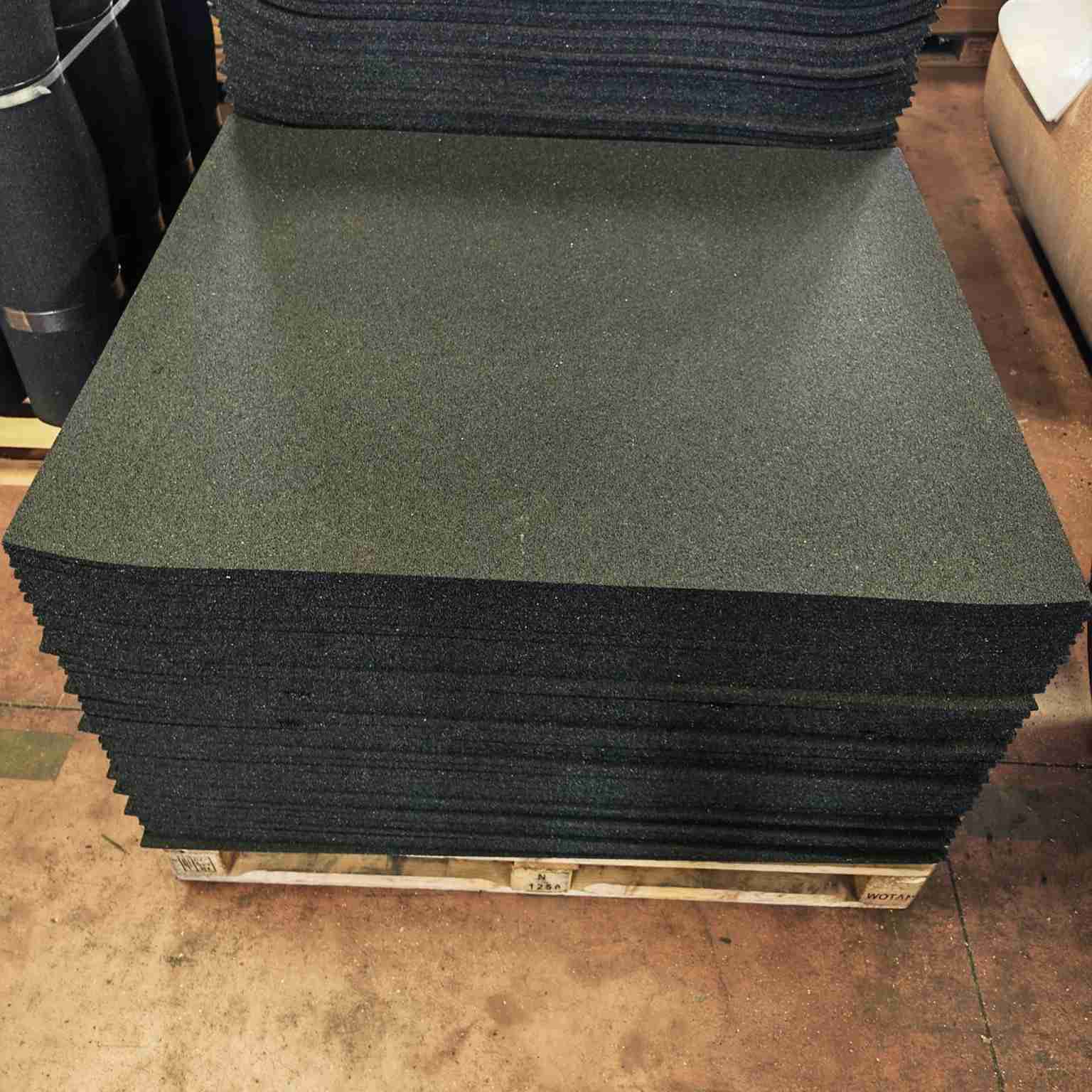
MGEL is a high-density (700 kg/m³) recycled rubber soundproofing panel engineered to increase the surface mass of partition walls and reduce airborne noise transmission between rooms. Available in two formats, 1.00 × 1.20 m for direct manual installation and 1.20 × 2.00 m for stud-framed double-wall systems, in 15 and 20 mm thicknesses. Made from recycled vulcanized rubber, MGEL is built for distributors and manufacturers of acoustic drywall panels who need a dependable component available in bulk volumes and easy to integrate into their own wall systems.

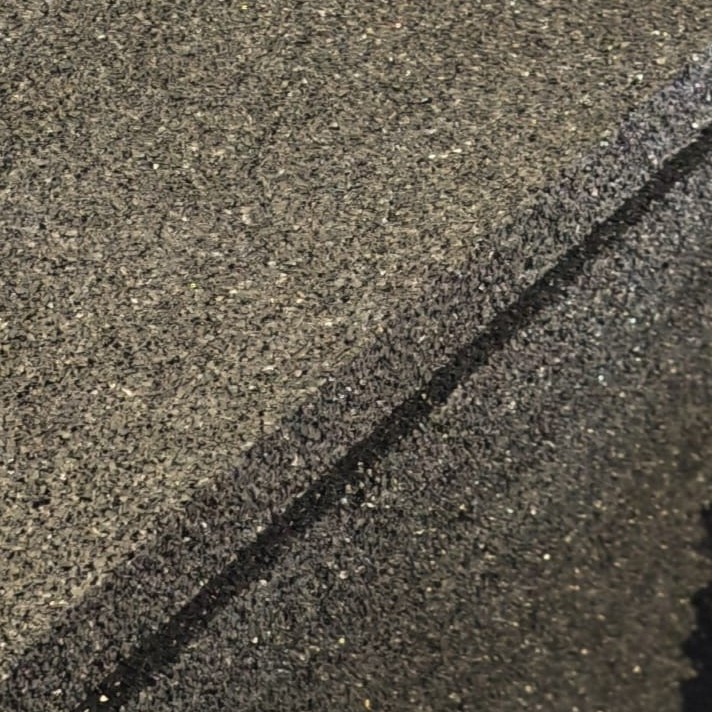
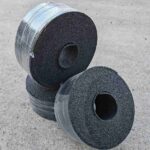
MGEL wall rubber panel for soundproofing texture

What is MGEL: the recycled rubber panel for partition wall soundproofing

MGEL is a high-mass, recycled vulcanized rubber panel designed specifically to reduce the airborne noise that passes through partition walls. Unlike sound-absorbing materials (which manage reverberation inside a room), MGEL works as a soundproofing barrier: its high density in a compact thickness increases sound insulation performance without requiring excessive wall thickness — a decisive advantage in retrofit projects where available space is limited.

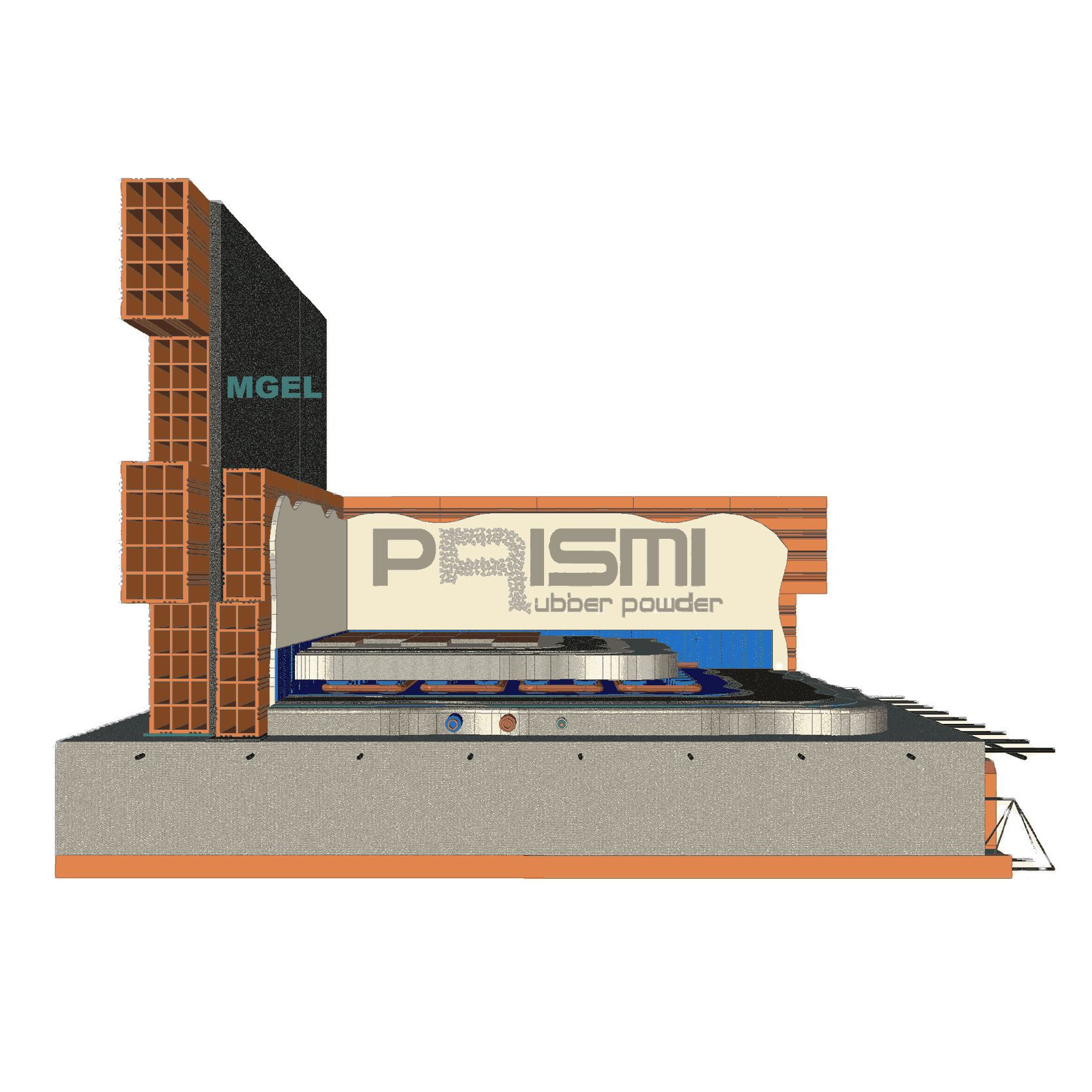
The panel is designed to be integrated into dry-wall systems (drywall, stud-framed double walls) or applied directly to existing masonry, making it a versatile solution both for renovation of apartments and offices and for industrial production of prefabricated acoustic panels.

MGEL technical specifications: two available formats

MGEL is produced in two distinct formats, each optimized for a specific installation method.

MGEL 100×120 — Format for manual installation

  • Size: 1.00 × 1.20 m
  • Available thicknesses: 15 mm, 20 mm
  • Density: 700 kg/m³
  • Recommended use: direct manual installation on existing walls, bonded with polyurethane foam or a high-hold specific adhesive
  • Key advantage: manageable format, ideal for retrofit and fast interventions without a frame

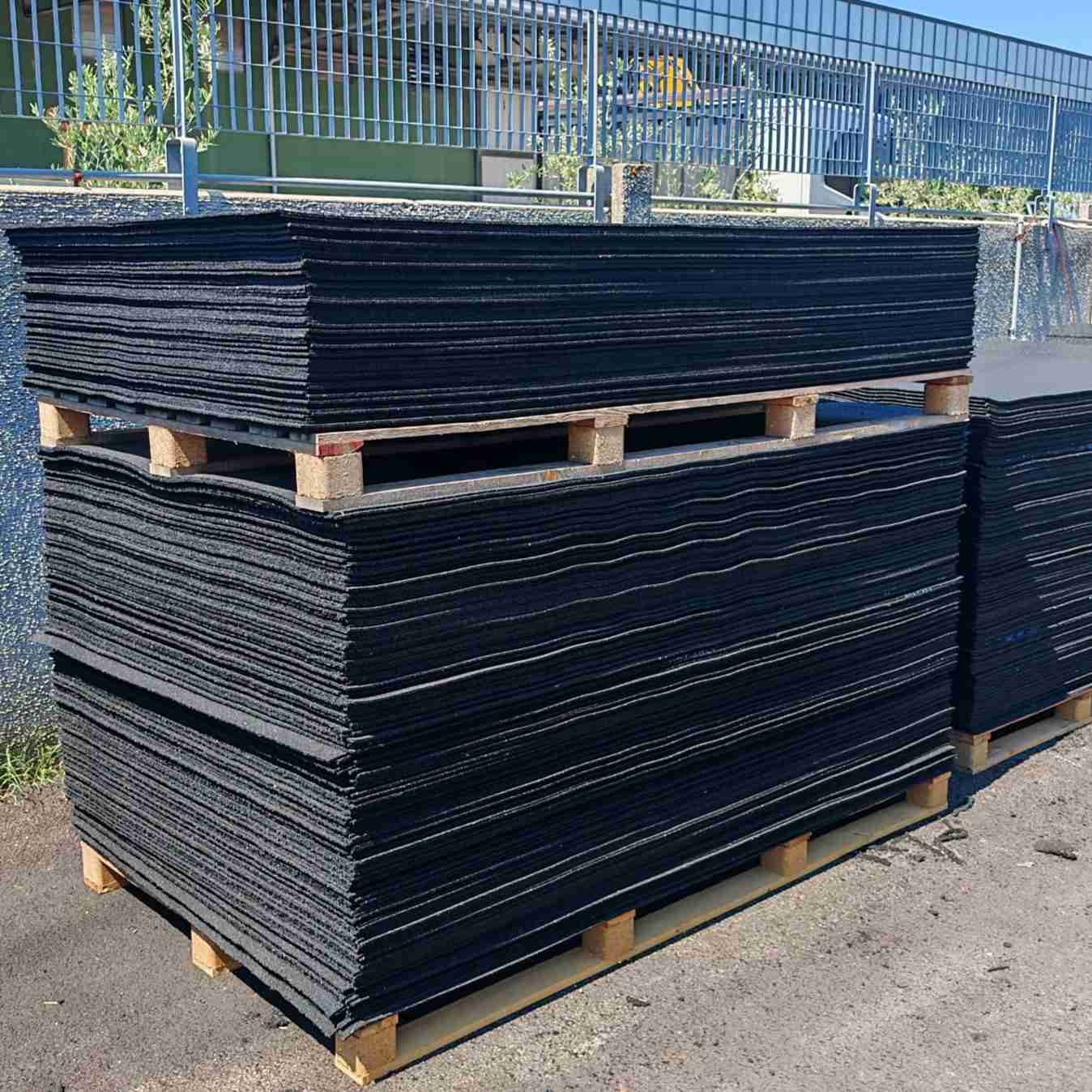
MGEL 120×200 — Format for stud-framed double-wall systems

  • Size: 1.20 × 2.00 m
  • Available thicknesses: 15 mm, 20 mm
  • Density: 700 kg/m³
  • Recommended use: interposed between two drywall boards in double-wall systems on a metal or wood stud frame
  • Key advantage: large format, optimized for professional installation and large-scale panel production

MGEL 100 x 120

MGEL 120 × 200

  • Size: 1.00 × 1.20 m
  • Thickness: 15 / 20 mm
  • Density: 700 kg/m³
  • Installation method: Direct manual bonding
  • Ideal for: Installers, fast retrofit
  • Size: 1.20 × 2.00 m
  • Thickness: 15 / 20 mm
  • Density: 700 kg/m³
  • Installation method: Interposed on stud frame
  • Ideal for: Panel manufacturers, professional job sites

Common features

  • High surface mass in a compact thickness, improving airborne noise insulation without a major increase in wall thickness
  • Dimensional stability and long-term durability
  • Compatible with acoustic sealing practices (acoustic mastic, putty pads for electrical outlets, joint tapes)
  • Made from recycled rubber, aligned with circular-economy criteria increasingly required in public procurement specifications

Installation guide: how to install MGEL panels

Direct installation on an existing wall (MGEL 100×120)

1. Preparation

2. Bonding

3. Sealing

4. Covering

5. Details
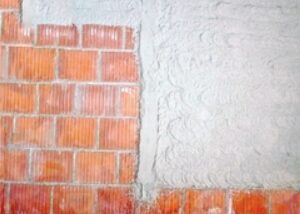
Remove any loose or flaking plaster, sand away dust, and check for residual moisture on the wall surface; repair cracks and irregularities beforehand, since an uneven substrate weakens adhesion and can create acoustic bridges once the wall is closed up.
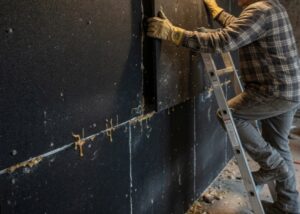
Bonding MGEL with poliurethane adesive and apply on partition wallApply polyurethane foam or a specific high-hold adhesive in spots or continuous beads across the back of the panel, then position it against the wall and press firmly along the whole surface to ensure uniform, air-tight contact with no gaps.
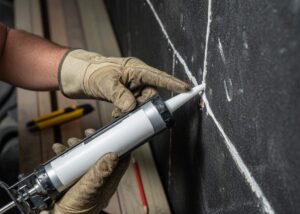
sealing perimeter rubber panel MGELSeal every joint between adjacent panels and the full perimeter against floor, ceiling and adjoining walls with acoustic mastic, since even a small unsealed gap can significantly reduce the overall airborne sound insulation of the finished wall.
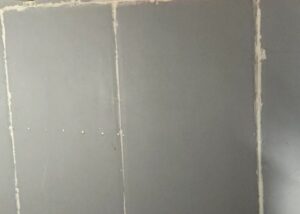


apply the plasterboard panels in two staggered layers and seal the edgesApply two staggered layers of drywall over the MGEL panel, offsetting the joints between the two layers and carefully filling and sealing every seam, in order to maximize the overall mass and continuity of the finished partition wall.


Seal electrical outlets and switch boxes with acoustic putty pads, and check for flanking noise paths such as skirting boards, adjoining stud walls and service penetrations, since these are common weak points that let airborne noise bypass the panel.

Stud-framed double-wall system (MGEL 120×200)

1. Frame

2. Placement

3. Fixing and sealing

4. Finishing
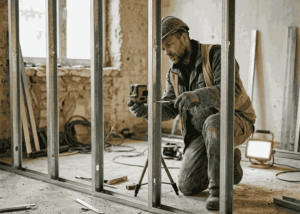
Double wall profile frame for soundproofingSet up a metal or wood stud frame with adequate spacing between uprights, sized according to the wall height and the loads it will support, making sure the structure is plumb and securely anchored before any panel is fitted to it.
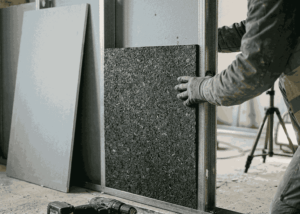
MGEL installation between double-wall plasterboard profilesFix the first drywall board to one side of the frame, bond the MGEL panel directly onto it or onto the studs, then complete the assembly with a second drywall board on the same side, staggering its joints against the first layer.
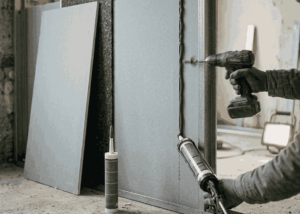
Fixing and finishing plasterboard panel jointsFix all boards with screws that comply with the frame type and board thickness, then seal the full perimeter and every joint between panels with acoustic mastic, since unsealed edges create direct paths for airborne noise to pass through.
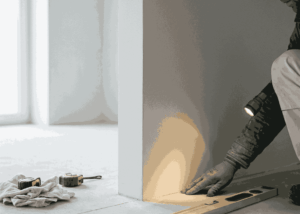
finishing the joints with elastic acoustic adhesiveApply the chosen surface finish once the boards are fixed, and carefully check that the acoustic sealing is continuous along the entire perimeter of the wall, with no gaps left at corners, floor, ceiling or adjoining structures.

Laboratory testing and Rw certification

Stay connected with us for lab results

The double-wall 8 cm + 12 cm system with an interposed MGEL panel is currently being tested at an ACCREDIA-accredited laboratory for Rw determination ISO 10140 / ISO 717-1.

The results, ready for september 2026, will provide the official reference value to benchmark the system’s performance against standards and technical specifications.

Why Rw certification matters

Rw is the reference index for airborne sound insulation and quantifies noise reduction between spaces.

An ACCREDIA laboratory test guarantees repeatable results, recognized nationally and across Europe — and readily accepted by international consultants working to ISO 717-1.

The results will allow designers and contractors to size interventions and declare performance in technical specifications.

MGEL for distributors and manufacturers of acoustic drywall panels

MGEL is built for a bulk B2B supply model: building material distributors, acoustic specialists, and manufacturers of acoustic drywall panels who want to integrate a dependable recycled rubber panel into their own product line, including under private label.

Wholesale supply and private label

Prismi produces MGEL as an OEM component for companies that manufacture own-brand soundproofing panels.

Ensuring supply continuity, consistent technical specifications batch to batch, and availability in both formats (100×120 and 120×200) to fit prefabricated panel production as well as direct distribution to installers.

Logistics and commercial advantages

Scheduled bulk supply with agreed lead times

Consistent density and thickness batch to batch, for repeatable specifications and technical data sheets

Recycled rubber material, useful for circular-economy requirements in public tenders

Dedicated technical-commercial support for distributors and manufacturers

Need a bulk supply of rubber acoustic panels for partition walls?

Request a dedicated technical data sheet or a bulk-volume quote

Frequently asked questions about MGEL rubber panel

Soundproofing a room requires increasing wall mass, sealing every gap, and reducing flanking noise paths. Effective solutions include applying high-density panels like MGEL combined with two staggered layers of drywall and proper sealing of joints and outlets.

Yes. High-density rubber materials provide mass and damping that reduce airborne noise transmission. Performance depends on density, thickness, and how the panel is integrated into the overall wall system.

Reduction depends on the overall system the panel is integrated into. Combined with double drywall and proper sealing, high-mass panels can contribute to a significant insulation improvement. Official Rw/STC figures come from accredited laboratory tests, currently underway for the MGEL system.

Yes. MGEL is available for B2B bulk supply, including private label, for distributors and manufacturers of acoustic drywall panels who need a recycled rubber component with consistent specifications batch to batch.

Use polyurethane foams or specific adhesives designed for high-mass panels, and acoustic mastic to seal joints and perimeters. Use acoustic putty for electrical outlets. Follow adhesive technical data sheets for compatibility and set times.