

Acoustic Wall Panels vs Rubber Sound Barrier: Which Works Better for Your Project
Acoustic Wall Panels vs Rubber Sound Barrier: Which Works Better for Your Project
These two product categories are often searched interchangeably but solve opposite problems. Here’s how to tell which one your project actually needs.
Two Categories, Two Purposes
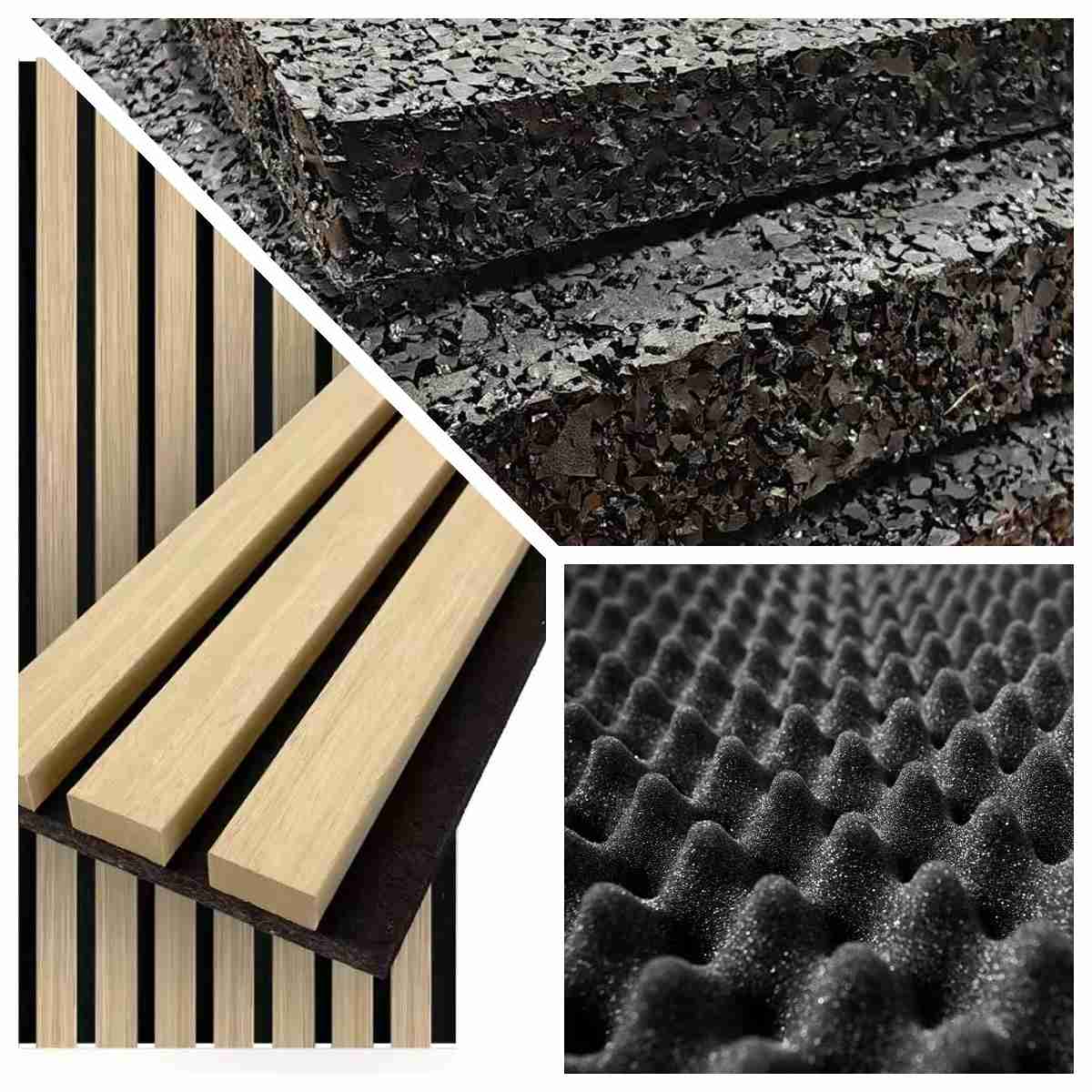
“Acoustic wall panels” most commonly refers to decorative, fabric-wrapped or felt panels mounted on a wall surface to absorb reverberation inside a room, common in home offices, studios and open-plan workspaces.
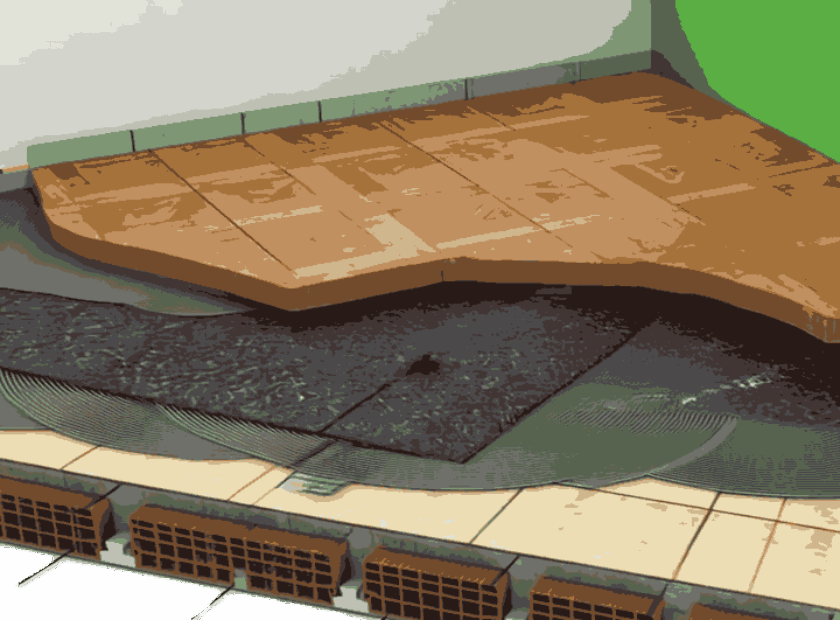
A rubber sound barrier, like MGEL, is a structural component installed inside a partition wall assembly to add mass and block noise from passing into the next room.
Searching for one when you need the other is a common and costly mismatch.
If You Want to Improve Room Acoustics
If the goal is reducing echo, improving speech clarity or making a room feel less “live,” decorative acoustic wall panels mounted on the surface are the appropriate solution.
This is an absorption problem, not a transmission problem, and no amount of surface panel will meaningfully stop noise from reaching the room next door.
If You Want to Stop Noise Between Rooms
If the goal is preventing conversations, music or machinery noise from being heard in the adjacent space, the solution is adding mass inside the wall assembly, which is what a rubber sound barrier is engineered to do.
This is a transmission problem, and it cannot be solved by surface-mounted absorptive panels alone, regardless of how many are installed.
For Distributors and Manufacturers Building Panel Lines
Companies that manufacture their own decorative or acoustic drywall panels and want to add genuine sound-blocking performance to their product line, not just surface absorption, can integrate a rubber core component like MGEL as a private-label OEM element, combining both mechanisms in a single finished product.
One Question Settles It
If you’re not sure which category you need, ask yourself this: can you already hear exactly what’s happening in the next room, or does your own room just sound harsh and echoey when you talk in it?
First case, no amount of surface-mounted panel will fix it, full stop, that’s a mass problem and it lives inside the wall, which is exactly what MGEL is for.
Second case, decorative absorptive panels are the right call and a lot cheaper.
We’ve seen too many people spend money on acoustic wall panels expecting privacy from neighbors, only to be just as annoyed a month later because they solved the wrong problem.
Worth a look too: Rubber Panels for Partition Walls hub, MGEL product page and Private Label Acoustic Panels Guide.