

Acoustic Underlay for Carpets & Floors: The Complete Guide
Acoustic Underlay for Carpets & Floors: The Complete Guide
Acoustic underlayment is the hidden layer that determines how much noise a finished floor actually blocks. Here’s how to specify it correctly.
What Acoustic Underlay Actually Does
Acoustic underlay sits between the subfloor and the finished flooring or carpet, absorbing impact energy before it transfers into the structure below.
A well-specified acoustic underlayment can be the difference between a floor that meets building noise regulations and one that generates ongoing complaints from occupants below.
Yet it’s often the most under-specified layer in a flooring project.
Rubber vs Foam vs Fiber Underlay
Rubber acoustic underlay offers the highest density-to-thickness ratio, making it the preferred choice where impact noise reduction is the priority and floor height is constrained.
Foam underlay is lighter and less expensive but compresses over time, gradually losing acoustic performance under foot traffic.
Fiber-based underlays (felt, recycled textile) offer moderate performance and better thermal insulation but generally underperform rubber in high-traffic commercial settings.
Soundproof Carpet Underlay: A Specific Case
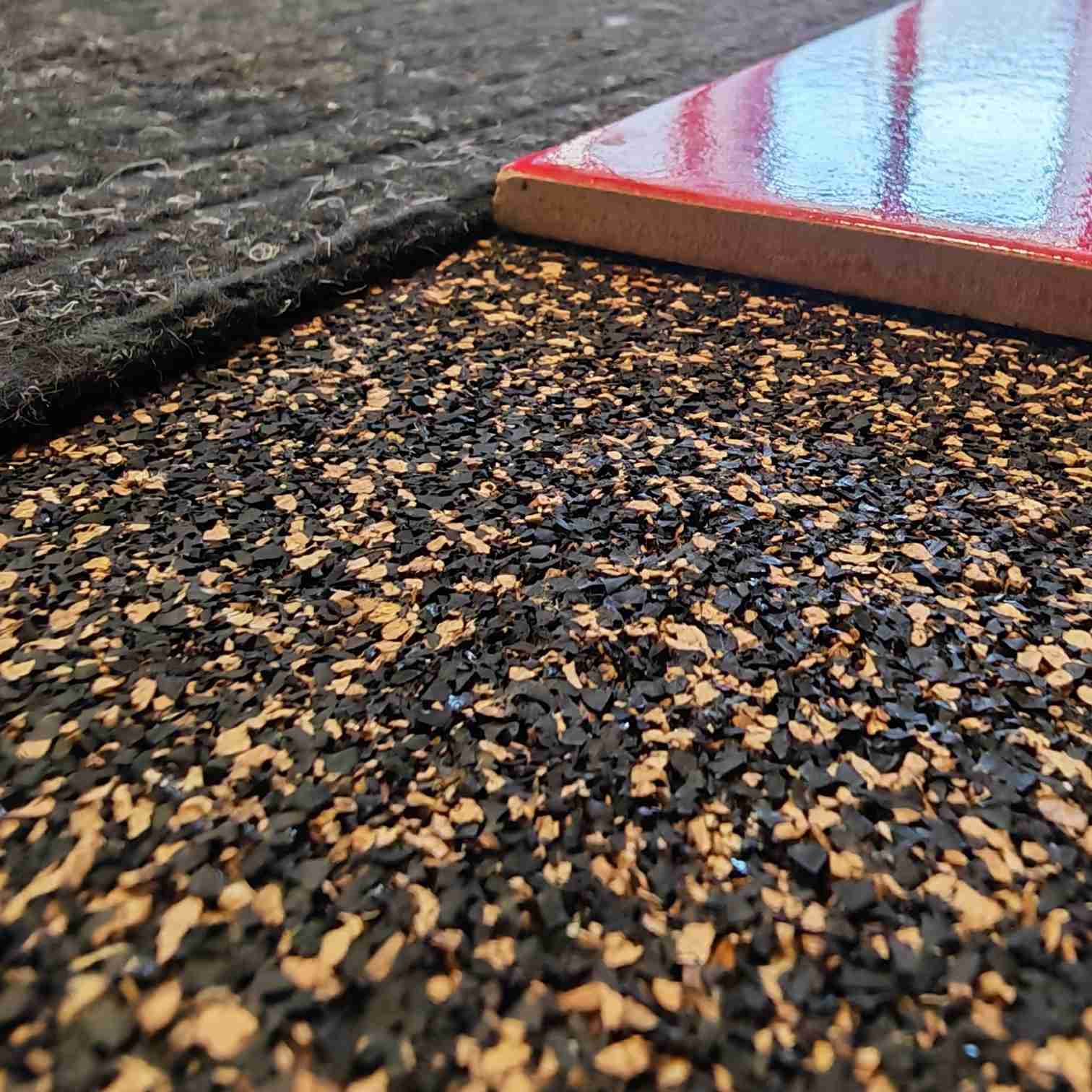
Soundproof carpet underlay needs to balance acoustic performance with comfort underfoot and carpet backing compatibility.
A rubber-based soundproof underlay for carpet typically performs best in multi-story residential and hospitality settings, where impact noise complaints (footsteps, dragged furniture) are the primary concern addressed by building codes.
Thickness Options and What They Mean
Acoustic underlayment is commonly available from 2 mm up to 10+ mm.
Thinner options suit renovation projects with strict height constraints; thicker rubber-cork composites are chosen when both acoustic and thermal performance are required.
As with all rubber-based sound products, density matters as much as thickness, a thin, high-density layer can outperform a thicker, low-density one.
Installation Best Practices for Acoustic Underlay
Acoustic underlay only performs to its rated specification when installed correctly.
Full, continuous contact with the subfloor is essential, any voids or air gaps beneath the underlay reduce its effectiveness and can create localized weak points that are difficult to diagnose after the finished flooring is installed.
Seams between underlay rolls should be taped, not just butted together, and the underlay should run continuously beneath the full room without interruption at doorways;
since gaps at transitions are a common and easily avoidable source of underperformance.
Warranty and Compatibility Considerations
Before specifying an acoustic underlay for carpet or hard flooring, it’s worth checking the flooring manufacturer’s own warranty terms, since some flooring warranties specify approved underlay types or maximum underlay density and thickness.
Using an incompatible underlay can, in some cases, void the flooring warranty even if the acoustic performance itself is excellent, a detail that’s easy to miss when underlay and flooring are sourced from different suppliers on the same project.
A Word on Product Fit (Because People Get This Wrong)
Not every rubber-based underlay is built for carpet, and honestly, a lot of buying mistakes happen because someone assumes “acoustic underlay” is one interchangeable category.
Products designed for floating hardwood, laminate or LVT sit beneath a rigid click-lock floor, carpet underlay needs to interface with a soft fabric backing instead, which is a different job entirely.
If you’re sourcing for a carpet project specifically, ask the supplier point-blank whether the product is rated for carpet.
Don’t assume a general listing covers it, because more often than not, it doesn’t.
Worth a look too: Acoustic Rubber Cork Rolls product page, Soundproof Flooring Guide and Rubber Soundproofing Sheets & Rolls.